Saturday, August 9, 2014

Fresh doubts over a Texas execution; New evidence revives concerns that a man was wrongly put to death in 2004


New evidence revives concerns that a man was wrongly put to death in 2004
Published on August 3, 2014
 
CORSICANA, Tex. — For more than 20 years, the prosecutor who convicted Cameron Todd Willingham of murdering his three young daughters has insisted that the authorities made no deals to secure the testimony of the jailhouse informer who told jurors that Willingham confessed the crime to him.

About this project: The investigation was reported and written by Maurice Possley for The Marshall Project, a new nonprofit news organization focused on the criminal justice system. Sign up for updates on their launch.

Since Willingham was executed in 2004, officials have continued to defend the account of the informer, Johnny E. Webb, even as a series of scientific experts have discredited the forensic evidence that Willingham might have deliberately set the house fire in which his toddlers were killed.
But now new evidence has revived questions about Willingham’s guilt: In taped interviews, Webb, who has previously both recanted and affirmed his testimony, gives his first detailed account of how he lied on the witness stand in return for efforts by the former prosecutor, John H. Jackson, to reduce Webb’s prison sentence for robbery and to arrange thousands of dollars in support from a wealthy Corsicana rancher. Newly uncovered letters and court files show that Jackson worked diligently to intercede for Webb after his testimony and to coordinate with the rancher, Charles S. Pearce Jr., to keep the mercurial informer in line...

Thursday, August 7, 2014

David Loy versus Sam Abed in Escondido regarding housing of migrant children

http://fox5sandiego.com/2014/08/06/aclu-appeals-escondido-rejection-of-housing-for-migrant-children/#ixzz39k1Qd2aW">ACLU appeals Escondido rejection of housing for migrant children
Fox News
Christian De La Rosa
Aug. 6, 2014

ESCONDIDO, CA — There is a new push to open a detention facility for migrant children in San Diego County. “The commission’s decision is not substantiated by the facts,” said David Loy, legal director for the San Diego American Civil Liberties Union.
The A.C.L.U. is appealing the city of Escondido’s denial of a land use permit to open a housing facility for unaccompanied minors crossing the Mexico border...
“The planning commission the decision was based purely on land use,” said Escondido City Mayor, Sam Abed.
But attorneys with the ACLU say city officials haven’t presented enough factual evidence to deny the housing facility, which would provide over 100 new jobs...
“I don’t understand why the A.C.L.U.’s position in getting involved with the land use, I think the ACLU has a political agenda,” said Abed...

Monday, August 4, 2014

Aaron Schwartz' suicide: why was this computer whiz placed in solitary confinement even after his bail was processed?

Did MIT go too far in the Aaron Schwartz case?  Why are universities so secretive about their research?  Why did the Department of Justice go after Aaron so savagely?

Aaron Swartz's father: He'd be alive today if he was never arrested


June 27, 2014

In 2013, Internet activist and Reddit co-founder Aaron Swartz ended his life while facing up to 35 years in prison for hacking.

Swartz faced multiple charges for breaking and entering into an MIT wiring closet and downloading academic journals, including two counts of wire fraud and 11 counts of violating the Computer Fraud and Abuse Act. Swartz, who was battling the court, also battled with depression. Prosecutors dropped the charges after his death.

I first met Swartz's father, Robert, last year as he explained his mission to fight for his son's memory by helping to change outdated laws. He wanted answers about why he lost his son.

His son's story is now the subject of a new documentary called "The Internet's Own Boy: The story of Aaron Swartz."...

Monday, July 28, 2014

Lawyers Who Criticize Judges Are Being Punished


Andy Ostrowski points to the Pennsylvania kids-for-cash scandal, where two county judges were convicted of charges involving millions of alleged kickbacks to send children to private juvenile detention facilities, as an example where lawyers failed to do the right thing.  --M.C. Moewe

Will Complaint About Judge’s Evidence Tampering Lead to Criminal Indictment? It Should 
centerforjudicialexcellence.org
July 10, 2014


...The Marin Courts have engaged in questionable behavior for as long as anyone can  remember. The
2006 arrest of Marin’s top court official John  Montgomery on felony conflict of interest charges barely raised an eyebrow. A 2009 shredding party orchestrated by current Marin Court Executive Kim Turner, which delayed an official state audit of the Marin Family Court by more than six months, was justified in a report from the Administrative Office of the Courts (AOC)...


[Maura Larkins' comment: We can search the archives of the Soviet Union and Nazi Germany and ancient civilizations, but we destroy the records of the United States' justice system?  This is hard for me to believe.  Are the documents really destroyed?  Or are they sent to the archives in Sacramento?]


Marin Judge Evidence Tampering
 June 19, 2014
Kathleen Russell
info@centerforjudicialexcellence.org


..MARIN COURT CEO BLOCKED STATE AUDITOR WITH DOCUMENT DESTRUCTION 

Turner’s 2009 destruction of child custody mediation working files, which were frequently subpoenaed when parents wanted to challenge a mediator’s recommendation to the court about child custody, took place while she was serving as a member of the Judicial Council of California.

The evidence destruction sparked a local public protest and a call for criminal investigation. However, the Marin Court stated that the destruction took place with the knowledge and approval of the California Administrative Office of the Courts (the staff agency of the Judicial Council), and both
the AOC and the Marin Court argued that the destroyed documents were not “official court records.” Read the 2010 local Marin news article about this here...

 
 ...Ironically, [Kim] Turner was the recipient of the California Judicial Council’s 2013 “William C. Vickrey Leadership in Judicial Administration Award.”  According to the Judicial Council, this award honors individuals in judicial administration for “significant contributions to and leadership in their profession.” In making the award to Turner, the Judicial Council noted that she “has been a very active member of a working group improving trial court records management.”...


Lawyers Who Criticize Judges Are Being Punished — Jonathan Turley
Daily Kos
Jul 28, 2014

One is a California family law attorney documenting alleged judicial crimes, the other a Pennsylvania civil rights attorney who has lost his law license for speaking out against judges. Both say they will continue to do what most lawyers won’t.

“They don’t speak up. The reason is you get targeted and you could lose your license,” said Barbara Kauffman of lawyers who witness judicial misconduct. Last month the California attorney contacted state officials alleging that a family court judge in Marin County tampered with court records.
Civil rights attorney Don Bailey had his law license suspended for five years in October by the Pennsylvania Supreme Court. “The reason I lost my license is because I criticized judges,” said Bailey, a former Democratic Congressman and state auditor general, in a phone interview last week.
The pattern of attorneys losing their careers or facing hefty fines after speaking out against judges has legal experts worried.

The law professor and legal analyst Jonathan Turley wrote of Bailey’s license suspension, “While some would agree with the case, there is a worrisome line of cases targeting lawyers who criticize judges.”

[Maura Larkins' comment: Pennlive.com notes: "Bailey's attitude is evident from his law firm's website, on which he says he is "well known for taking on the high-profile and controversial cases many attorneys fear..'He refuses to recognize...the harm that he is causing to his clients and to the judicial system,” members of a disciplinary review committee wrote.'" 
It seems that the disciplinary committee is saying that when Bailey criticizes judges, the judges can be expected to retaliate against his clients.  Shouldn't the judges--rather than Bailey--be called to account for such retaliation? 
A justice system that sends kids to private detention so that judges will get millions in kickbacks hardly needs any help from Mr. Bailey to get a bad reputation.  Why didn't someone disbar the lawyers who sat silently while the kickback scheme proceeded?
Many lawyers harm their clients, but as long as the lawyers don't criticize judges, they are in little danger of losing their licenses.]
America’s judicial system is extremely ineffective at removing bad judges, said Kathleen Russell, the founder of the Center for Judicial Excellence, a non-profit that is working to stop family court judges from giving child custody to domestic abusers and pedophiles. “Judges are judicially trafficking children to abusers by ignoring evidence of child abuse. Even when judges behave maliciously, there is no law that holds them accountable.”

Over the past 40 years, court rulings have given judges increasingly strong immunity from civil suits under the principle that judges shouldn’t be sued by anyone unhappy with their decisions in court. Most notable is the 1978 Supreme Court decision Stump v. Sparkman that rejected a suit filed against an Indiana judge who ordered a 15-year-old sterilized without her knowledge.

The Democratic nominee for Congress in Pennsylvania’s 11th District has made a focus of his campaign curbing judicial abuses and protecting lawyers who criticize judges. Andy Ostrowski points to the Pennsylvania kids-for-cash scandal, where two county judges were convicted of charges involving millions of alleged kickbacks to send children to private juvenile detention facilities, as an example where lawyers failed to do the right thing.

“That didn’t happen in a vacuum,” Ostrowski said. “There were lawyers who were in there watching as these children were led into the courtroom in shackles without representation and led out in shackles to prison. They all knew it was wrong. Why didn’t they speak up? Simple — because they were afraid.”

The Pennsylvania Supreme Court has taken the law license of several lawyers for criticizing judges, as described in a table that follows this story.

Fearful lawyers combined with strong immunity laws keep bad judges on the bench. Even in the kids-for-cash scandal, where the judges were criminally convicted and are serving lengthy prison sentences, experts say that civil suits filed on behalf of the children will likely have a tough time piercing judicial immunity.

In a blog post published on Thursday, Turley described how judicial immunity was used to dismiss a civil suit against a Michigan judge who was having an affair with the wife of a man before him in a custody case. “By any measure, former Wayne County Circuit Judge Wade McCree was a disgrace to the bench,” Turley wrote. “His case unfortunately could embolden other judges who consider abandoning the most basic ethical demands of their office.”

Ostrowski is one of only two political candidates in the U.S. who has signed a pledge to eradicate judicial corruption started by the Campaign for Judicial Integrity, an effort founded by disbarred California attorney Richard Fine, who was jailed for 18 months by a judge who found him in contempt.

Fine’s 2009 disbarment stemmed from court filings he submitted against judges for taking $57,000 in side pay from the county to supplement their state salaries. “Fine has long contended that the charges against him are politically motivated,” the State Bar of California summary of Fine’s disbarment explained. “The cases he filed against judges were not retaliatory, he said, but instead were based on his belief that judges who accept money from a county fund to augment their compensation have a conflict of interest in any matter involving government municipalities. 

 Fine was jailed indefinitely in March on contempt of court charges — for refusing to answer a judge’s questions and practicing law without a license.”

Fine, 74, said he is still not sure why the judge finally set him free after 18 months.  

But Allan Parachini, who was the Los Angeles Superior Court spokesman while Fine was in jail, compared his incarceration to actions more common in authoritarian countries.

“Fine was effectively a political prisoner for a year and a half,” Parachini, who no longer works for the superior court, told Full Disclosure Network in 2012. “This wasn’t about contempt. This wasn’t about getting him to disclose whatever it was he was directed to disclose. It was about getting back at him.”

[Maura Larkins comment: Judges tend to be extremely subjective regarding which attorneys are forced to turn over documents.  I have been amazed at how judges let some attorneys get away with refusing requests for production of crucial documents.]

The California Bar has not opposed three successive motions in the state Supreme Court to set aside the disbarment, but the court has yet to reinstate his law license, said Fine, a former Department of Justice prosecutor. A case to force the justices to restore his license is now before the U.S. Court of Appeals for the Ninth Circuit.

“I understand why lawyers are not speaking up when they witness corruption. They want to protect their income and they want to protect their families,” Fine said. “They took an oath to uphold the laws of the United States. If they did not intend to fulfill the oath and uphold the laws, they should have saved themselves and the public from their hypocrisy.”

Kauffman, the California attorney who notified officials last month of alleged criminal wrongdoing by a judge, said protecting the integrity of the U.S. justice system can be a lonely task. Last year, she filed a lawsuit against a retired Shasta County judge who had been appointed to preside over cases 208 times since 1994, never having to face election to hold the position. “I couldn’t get anyone to serve him. I had to go to his house and do it myself,” Kauffman said. The state barred the judge from serving shortly after she filed the lawsuit.

Losing her law license is not the 58-year-old attorney’s only worry. “I have concerns about safety,” Kauffman said. “For a while my office was getting broken into on a regular basis. For months, each night the alarm would go off. I had a strange man knock on my door and tell me he knew where my kids were playing.”

Being vocal is her best protection, Kauffman said...

Saturday, July 26, 2014

Why law school’s love affair with economics is terrible for the American legal system

Why law school’s love affair with economics is terrible for the American legal system
Law schools are putting more and more emphasis on a cash-crazed free market ideology. Here's what's at stake
Ted Hamilton
Salon.com
July 26, 2014

Like nearly 40,000 other young Americans, I recently completed my first year of law school. For our cohort of would-be attorneys, the past 10 months have consisted of little beyond underlined casebooks, cold calls in lecture and obscure citation methodologies. The dividends, at least so we tell ourselves, are brains better equipped to parse the verbal contortions of our overly legalized society, and temperaments hardened against the drudgeries of a famously pugnacious profession.
This summer, as we fan across the world to complete internships at bright-eyed nonprofits, cash-strapped bureaucracies and sprawling mega-corporations, we’re forced to start deciding how to use those newfound skills. Lawyers are not famously honest people; as a whole, attorneys’ ethics are well within reproach. Two years shy of taking the bar and already immersed in this suspect culture of law, then, we would-be advocates have to choose whether to conform to the desultory trend or buck it — to pick either good or evil, you might say.
A year ago, I imagined — as most people probably do — that the initial year of legal studies would put a heavy emphasis on the good. I anticipated lots of lofty vocabulary about justice and rights and freedom. Attorneys may not have the cleanest reputations, but it seems fitting that an introduction to the life of the law would aim high, if only as an idealistic and rhetorical reprieve before the realities of the job market set in. But while there’s certainly some discussion of liberty and righteousness in the halls of our law schools, there’s not quite as much of it as you might think. The path to the bar is not paved with sentimental cobblestones of the Good and the Right. It’s much more pragmatic than that.
In fact, the most repeated word in my first year law curriculum was not justice, or liberty or order.
It was efficiency...

Thursday, July 17, 2014

Documents Show General Motors Kept Silent on Fatal Crashes
By REBECCA R. RUIZ and DANIELLE IVORY
New York Times
JULY 15, 2014

In a truly civil society, corporate executives would do hard prison time for contributing to or covering up death and destruction.
Mike Velemirovich, Nova Scotia


How can GM corporate individuals remain completely unpunished after making such terrible decisions?? It defies logic. They are brazen... The car crash that killed Gene Erickson caught the attention of federal regulators. Why did the Saturn Ion he was traveling in, along a rural Texas road, suddenly swerve into a tree? Why did the air bags fail? General Motors told federal authorities that it could not provide answers.

But only a month earlier, a G.M. engineer had concluded in an internal evaluation that the Ion had most likely lost power, disabling its air bags, according to a subsequent internal investigation commissioned by G.M.

Now, G.M.'s response, as well as its replies to queries in other crashes obtained by The New York Times from the National Highway Traffic Safety Administration, casts doubt on how forthright the automaker was with regulators over a defective ignition switch that G.M. has linked to at least 13 deaths over the last decade.

They provide details for the first time on the issue at the heart of a criminal investigation by the Justice Department: whether G.M., in its interaction with safety regulators, obscured a deadly defect that would also injure perhaps hundreds of people...

Sunday, July 6, 2014

Hobby Lobby demonstrates that RFRA violates the establishment clause

Hobby Lobby demonstrates that RFRA violates the establishment clause Jul 06, 2014
Bill of Right
Congress shall make no law respecting an establishment of religion
Congress shall make no law respecting an establishment of religion, or prohibiting the free exercise thereof [. . .] (First Amendment to the U.S. Constitution.)
In Employment Division v. Smith, Justice Scalia wrote for the U.S. Supreme Court that:
We have never held that an individual's religious beliefs excuse him from compliance with an otherwise valid law prohibiting conduct that the State is free to regulate. On the contrary, the record of more than a century of our free exercise jurisprudence contradicts that proposition. the right of free exercise does not relieve an individual of the obligation to comply with a valid and neutral law of general applicability on the ground that the law proscribes (or prescribes) conduct that his religion prescribes (or proscribes). [Emphasis supplied.]
Congress did not like this interpretation of the free exercise clause, and passed the Religious Freedom and Restoration Act by large majorities and President Clinton signed the law. What did RFRA do?  Expressly RFRA was intended to:
The purposes of this chapter are— (1) to restore the compelling interest test as set forth in Sherbert v. Verner, 374 U.S. 398 (1963) and Wisconsin v. Yoder, 406 U.S. 205 (1972).
Justice Scalia could have retorted that he followed Sherbert and Yoder in Smith. So, no "restoration" was required. Justice Alito, writing in Hobby Lobby v. Burford, is dishonest (I use this word purposefully) in his opinion when he writes, as you can see below the flip:
Nothing in the text of RFRA as originally enacted suggested that the statutory phrase “exercise of religion under the First Amendment” was meant to be tied to this Court’s pre-Smith interpretation of that Amendment.
Other than the express language I quoted above from RFRA, of course. And, of course, there are Justice Alito's own words in the same opinion:
Congress, in enacting RFRA, took the position that “the compelling interest test as set forth in prior Federal court rulings is a workable test forstriking sensible balances between religious liberty and competing prior governmental interests.” [Emphasis supplied.]
But leave the dishonesty aside, what of this interpretation of RFRA? IF in fact RFRA means what the Hobby Lobby court says it means, what of the First Amendment's prohibition that "Congress shall make no law respecting an establishment of religion." Isn't RFRA a law intended to favor religious exercise over non-religious exercise? As interpreted by the Hobby Lobby court, it is, and thus is unconstitutional. I explored this issue in this post. I quoted Justice Stevens concurrence in the case of Boerne v. Flores:
In my opinion, the Religious Freedom Restoration Act of 1993 (RFRA) is a "law respecting an establishment of religion" that violates the First Amendment to the Constitution. If the historic landmark on the hill in Boerne happened to be a museum or an art gallery owned by an atheist, it would not be eligible for an exemption from the city ordinances that forbid an enlargement of the structure. Because the landmark is owned by the Catholic Church, it is claimed that RFRA gives its owner a federal statutory entitlement to an exemption from a generally applicable, neutral civil law. Whether the Church would actually prevail under the statute or not, the statute has provided the Church with a legal weapon that no atheist or agnostic can obtain. This governmental preference for religion, as opposed to irreligion, is forbidden by the First Amendment. Wallace v. Jaffree, 472 U.S. 38, 52—55 (1985). [Emphasis added]
Justice Stevens' analysis is based solely on the text of RFRA. But the Hobby Lobby decision makes clear that the court's interpretation of RFRA not only will favor "religion, as opposed to irreligion," but certain religious beliefs over others. In Hobby Lobby, Justice Alito insists the decision is narrow, that this does not mean that religious beliefs that are "burdened" because the insurance coverage mandated by the Affordable Care Act, which includes immunizations or blood transfusions, will be relieved of this obligation under RFRA. Alito does not explain why this is so. What is different about the religious belief against immunizations and blood transfusions versus Hobby Lobby's objection to birth control? Or, racial, gender or sexual orientation discrimination or that matter? Here is Alito's hand-waving:
Our decision should not be understood to hold that an insurance-coverage mandate must necessarily fall if it conflicts with an employer’s religious beliefs. Other coverage requirements, such as immunizations, may be supported by different interests (for example, the need to combat the spread of infectious diseases) and may involve different arguments about the least restrictive means of providing them. The principal dissent raises the possibility that discrimination in hiring, for example on the basis of race, might be cloaked as religious practice to escape legal sanction. See post, at 32–33. Our decision today provides no such shield. The Government has a compelling interest in providing an equal opportunity to participate in the workforce without regard to race, and prohibitions on racial discrimination are precisely tailored to achieve that critical goal.
What is Alito saying here? Simply this: Some religious beliefs are more equal than others. Immunization? That's different. Your religious objections on that will hold no water in the court.  You object to interracial relationships? (See Bob Jones University v. United States.) Sorry, that religious belief is not respectable, so no "religious liberty" for you. So you want men and women to be segregated on a public transit bus for religious purposes? Sorry,  that religious objection gets no respect here. Whether this impulse of the court to favor certain religious objections over others is driven by political calculation or just the belief that some religious beliefs are better than others, it runs afoul of the establishment clause...

Saturday, July 5, 2014

George Takei's blistering response to HobbyLobby: Could a Muslim Corporation impose Sharia Law?

by Vyan
Daily Kos
 Jul 03, 2014

Some people just know how to say it, so I'm gonna shut up and let the former Mr. Sulu do so.
http://www.rawstory.com/...
"The ruling elevates the rights of a FOR-PROFIT CORPORATION over those of its women employees and opens the door to all manner of claims that a company can refuse services based on its owner’s religion,” Takei wrote. (O)ne wonders,” he said, “whether the case would have come out differently if a Muslim-run chain business attempted to impose Sharia law on its employees.”
“Hobby Lobby is not a church. It’s a business — and a big one at that,” he continued. “Businesses must and should be required to comply with neutrally crafted laws of general applicability. Your boss should not have a say over your healthcare. Once the law starts permitting exceptions based on ‘sincerely held religious beliefs’ there’s no end to the mischief and discrimination that will ensue.Indeed, this is the same logic that certain restaurants and hotels have been trying to deploy to allow proprietors to refuse service to gay couples.”
Chillingly he's not even a slightly wrong on that last point, the religious push-back against granting LGBT rights by corporations has already begun... you'll find the details just beyond the Orange Squiggle of Mordor below.
Religious Organizations and companies are in fact already attempting to push back on President Obama's brand new rules requiring LGBT equality for Federal Contractors in the immediate aftermath of Hobby Lobby. 'Cuz clearly, They. Gots. Religion.
http://talkingpointsmemo.com/...
The day after the Supreme Court's Hobby Lobby ruling, a group of religious leaders sent a letter to President Barack Obama asking that he exempt them from a forthcoming executive order that would prohibit federal contractors from discriminating against LGBT people. "Without a robust religious exemption," they wrote, "this expansion of hiring rights will come at an unreasonable cost to the common good, national unity and religious freedom."
The letter didn't mention the Hobby Lobby decision directly. But one of the signees, Michael Wear, the Obama 2012 veteran, told The Atlantic that the court decision meant the administration would need to address such concerns.
"The administration does have a decision to make whether they want to recalibrate their approach to some of these issues," he said.
So just as Justice Ginsberg and Mr Takei have suggested, the Hyper-Religious are already attempting to capitalize on the SCOTUS new granting of the rights of an human individual to a corporate entity for the specific purpose of denying the rights of a human individual. One does wonder just how loudly they would squeal if a non-christian, or a Muslim, a Buddhist, a Ba'hai, a Sikh, a Jewish, a Wiccan, an Amish, an Athiest or a Satanic "closely-held" corporation were to proclaim they no longer had to abide by, respect, hire or provide services for -- Pro-Life Christians?
"Oh, no you don't - No 'Religious Freedom' for You!  Or you, or You!"
I understand that in this decision the SCOTUS Majority opinion claimed that they were not granting the equal legitimacy of such follow on requests, but they've sent up the flare signal, they've kicked open the door, and soon now the potential avalanche may follow.  I'm not really sure they can stop all that snow from crashing down with just one teeny, tiny little rhetorical umbrella of "Because, uh, no".
And why exactly would others - particularly on the hard right - not pile on?  It's not like we've seen anything resembling restraint, or tact, or reason coming from the them in the Hobby Lobby wake.
http://talkingpointsmemo.com/...
Not From Erick Erickson.
Not from Rush Limbaugh.
"Pregnancy is something that you have to do to cause. ... Yet we treat it as a great imposition that women need to be protected from. It's a sickness, it's a disease, it's whatever, and there's gotta be a pill for it," he said on his show. "Yet they wouldn't have the problem if they didn't do a certain thing. It's that simple."
Yes, that's right women who suffer from polycystic ovarian syndrome, are at a risk of ovarian cancer, Endomitriosis and heavy menstral bleeding don't need a pill, or a shot, or a patch or an IUD to help with that.  Or so the Wingnuts continue to believe.  [It does always amaze me that so many of these "Right-to-Lifers" repeatedly fail to recognize that without access to effective healthcare - regardless of cost - some of us post-embryonic-Americans Will. Not. Live.] And they also don't believe that both men an women have a civil right to enjoy sex with the (adult & consenting) person of their choosing either.
Not according to Rep Mike Lee who was asked....
"whether or not a person who runs a business should be forced to provide something that is largely for recreational behavior, if it goes against their religious beliefs." "Yea, that’s right, that’s right," Lee responded.
No, no - that's kinda wrong - because what you smell right there isn't "Recreation" - it's the very heart and soul of "Freedom, Baby, yeah!". But not Freedom for All because now we're not just having sex between Adam and Eve, or Adam and Steve, we're all having sex with Adam, Eve, Steve and Hobby Lobby.  Gee, is the Bath House is getting kinda crowded in here?  And who keeps putting all these cheesy paper-mache' flowers everywhere? Did we order these?
Takei - bless his soul - also pointed out the basic hypocrisy of Hobby Lobby's business practices in regards to religion.  Noting that...
...Hobby Lobby has invested in multiple companies that manufacture abortion drugs and birth control. The company receives most of its merchandise from China, a country where overpopulation has led to mandatory abortions and sterilizations for women who try to have more than one child.
You would think that in all the time since Hobby Lobby filed this suit in 2010 they might have considered divesting in the manufacture of the same types of drugs they now say are "intolerable" to their religious views, or that they might possibly consider cultivating a supply line that doesn't subsidize forced abortions and sterilization since one would think that might "shock the conscience" of those with such deeply "sincerely held" beliefs. Or apparently not.
The hypocrisy of this is so glaring, that even CNN took a few moments to drop their Malasyan Flight Search Goggles and take notice....
http://www.rawstory.com/...
CNN host Ashleigh Banfield on Wednesday highlighted the “hypocrisy” of Hobby Lobby for investing in companies that made the same birth control products that it refused to provide to female employees.
“The critics are calling Hobby Lobby’s 401(k) investments hypocrisy at its finest,” Banfield emphasized on Wednesday, adding that CNN had not gotten an explanation from the company after giving it “plenty of time” to respond.
“I don’t even know where to begin on this one,” the CNN host remarked. “I kept thinking to myself, this had to be an accident. But then I thought, it’s no accident when you are in the middle of the biggest political storm — all the way to the Supreme Court — and, yet, your guys aren’t aware of what your investments are in your very, very large 401(k)?”
Nope, no way, this was no boating accident, Ultimately Takei called for a Boycott of Hobby Lobby and another other company that attempts to impose it's religion on it's employee or anyone else.
“While we work to overturn this decision by legislation, people of good conscience should BOYCOTT any for-profit business, including Hobby Lobby, which chooses to impose its religious beliefs on its employees,” said Takei. “The only way such companies ever learn to treat people with decency and tolerance is to hit them where it counts — in their pocketbooks.”
One wonders - yet again- that if not only boycotters but picketers began to show up at Hobby lobby stores with meme signs that said "Corporation = Person, Blystocyst = Person, Woman = Meh!", or perhaps some giant xerox copies of their 401(k) earnings statements, or pictures of factories in china with women packed into dorms surrounded by suicide nets or maybe just a simple single bloody hanger... That Hobby Lobby would ask the Supreme Court to grant them a 35 Foot Buffer Zone? 

Saturday, June 28, 2014

The Supreme Court’s baffling tech illiteracy is becoming a big problem


If one thing was clear from decisions handed down this week, it's that SCOTUS is clueless on technology


...The problem isn’t that the justices are old fogeys. The problem is that the justices were groomed in a field that emphasizes reasoning by analogy. And analogies were critical in these cases: The Aereo decision, for example, hinged on whether the company was more like an equipment provider or a cable company; the Riley and Wurie decisions addressed whether cell phones are sufficiently analogous to wallets. But emerging technology is, by definition, about breaking away from history. Perhaps reason by analogy hamstrings innovation, or perhaps it promotes impartial decision-making. In any event, it helps explain why the justices sometimes say such silly things.
Years of tortured analogies at oral arguments culminated most recently with this week’s cases, but a look back at decisions from years past reveals an abaundance of strained analogizing. In past arguments, computers were analogized to typewriters, phone books and calculators. Video games were compared to films, comic books and Grimm’s fairy tales. Text messages were analogized to letters to the editor. A risk-hedging method was compared to horse-training and the alphabet. EBay was likened to a Ferris wheel, and also to the process of introducing a baker to a grocer. The list goes on.


“I think there are very, very few things that you cannot find an analogue to in pre-digital age searches,” Justice Breyer said during the Riley oral argument. “And the problem in almost all instances is quantity and how far afield you’re likely to be going.” For the high court, a prior century or two apparently isn’t too far afield.
The justices are tickled by these analogies. Justice Kennedy, for example, appears blissfully unaware of the new definition of “troll,” and covered for his ignorance with a joke during oral argument for eBay v. MercExchange: “Is the troll the scary thing under the bridge, or is it a fishing technique?” This raised eyebrows in the patent industry, where “patent troll” is a stock phrase. Justice Bryer, during the the Riley oral argument, interrupted a discussion about the GPS capabilities of smartphones with another analogy joke: “I don’t want to admit it, but my wife might put a little note [with directions] in my pocket.” (Is the smartphone supposed to be like his wife? Unclear.)
Justice Alito, arguably the most analogy-obsessed of the bunch, best summed up the Court’s historical handicap when he teased Scalia in 2011, saying: “I think what Justice Scalia wants to know is what James Madison thought about video games. Did he enjoy them?”
But this fixation on technological analogies is more than just an idle curiosity. It has real-world implications that are not to be underestimated. Recent years have borne out that if a technology under scrutiny cannot be analogized to a historically protected invention, it may be doomed. In 2006, for example, Chief Justice Roberts doubted that eBay was an actual invention. He asked the lawyer, Seth Waxman, what the invention of eBay was, and when Waxman explained it as an electronic market, Chief Justice Roberts responded flippantly, saying, “I mean, it’s not like he invented the internal combustion engine or anything. It’s very vague.”...
 

Friday, June 27, 2014

Here is a judge and a case that offers a bit of hope for our legal system

Judge Awards Utah Couple $306,750 in Case Against Retailer That Tried to Impose Fine for Critical Online Review

Statement of Scott Michelman, Attorney, Public Citizen

June 26, 2014

Contact: Angela Bradbery (202) 588-7741
Scott Michelman (617) 899-9076

On Wednesday, Judge Dee Benson of U.S. District Court in Utah awarded Public Citizen clients John and Jen Palmer $306,750 ($102,250 in compensatory damages and $204,500 in punitive damages) against the online retailer KlearGear.com. The company had demanded $3,500 from the Palmers for writing a critical online review of the company, then ruined John’s credit when he refused to pay.

As a result of KlearGear.com’s actions, the Palmers lost credit opportunities; suffered anxiety, fear and humiliation; and spent weeks without heat in their home for themselves and their 3-year-old son when their furnace broke and they were unable to obtain a loan to replace it.

Public Citizen sued KlearGear.com on the Palmers’ behalf in December. When KlearGear.com failed to respond, the court granted a default judgment declaring that John did not owe the $3,500 and setting a hearing, held Wednesday, to determine damages. After an hour-long hearing at which both plaintiffs testified, the judge announced the award from the bench.

We are gratified by Judge Benson’s ruling, which appropriately compensates the Palmers for their ordeal and punishes KlearGear.com for its abuse of the credit reporting system in retaliation for the Palmers’ speech. The court sent a strong message that corporate bullying of consumers would not be tolerated. The Palmers are relieved that John’s credit has been restored and they feel vindicated by today’s award.

More information about the case is available here.

Friday, June 20, 2014

Canadian Judge Says Google Must Remove Links Worldwide

 Is the golden age of the Internet over?  Will we need to go back to the printing press to share information?

Canadian Judge Says Google Must Remove Links Worldwide

Google has argued that following a global order by a Canadian court to remove specific search results could put in into conflict with laws of other countries.

OTTAWA — Google will appeal a decision by a court in British Columbia that requires the company to remove specific search results worldwide. While the case stems from an intellectual property dispute between two small industrial equipment companies, some legal experts say that if the decision is upheld it could have far-reaching consequences for the Internet.
The temporary order, granted last Friday by the Supreme Court of British Columbia, emerged from protracted litigation between two companies which were once both closely connected. Equustek Solutions makes a device that allows industrial machines made by different manufacturers and that use different software to communicate with each other. Those products were marketed by another company, Datalink, which sold them under its name.
While the two companies almost merged at one point, relations soured in the middle of the last decade and they split. One result of that was the court finding that Datalink’s stole Equustek’s designs and engineering to create its own device, which it largely sells through the Internet.
Trying to block the sales of Datalink’s product, however, has not been easy despite a court order banning online sales in December 2012. Datalink’s owners appear to have left Canada and the location of its Web-based operation is unclear.
In an earlier court ruling, the court ruled in favor of Equustek Solutions and its principals. After that ruling, Google Canada began to voluntarily remove the Web address related to Datalink from searches made through Google.ca. But in last week’s decision, Justice Lauri Ann Fenlon found that Datalink swiftly set up new websites with slightly different addresses every time it was blocked from search results in Canada by Google.
“Websites can be generated automatically, resulting in an endless game of ‘whac-a-mole’ with the plaintiffs identifying new URLs and Google deleting them,” she wrote.
Her solution, unprecedented for Canada, was the interim injunction requiring Google to kill all Datalink search results worldwide.
If upheld and then emulated by courts in other countries, said Michael Geist, a law professor at the University of Ottawa, the Internet could go from being perceived as a lawless place to “one where all courts apply” setting up conflicts between nations on several issues, particularly freedom of expression.
“The judge recognizes that there is this global impact but doesn’t really want to deal with it,” said Professor Geist, who holds the Canada Research Chair in Internet law. “Where this decision goes off the rails is when the court decides its order making power is limitless.”
Google Canada declined to comment beyond a short statement: “We’re disappointed in this ruling and will appeal this decision to the British Columbia Court of Appeals, B.C.’s highest court.”
Professor Geist said he was puzzled that the order involves Google and no other web search provider, like Bing, making the information still easily available.
And while he agreed that the court could, and probably should have, ordered these search results struck in Canada, he said that it overreached with its global order. It would have been more appropriate, Professor Geist said, if Equustek sought similar orders in each of the countries where Datalink does business. They are not likely very numerous. Court filings indicate that at its peak in 2005, Equustek only sold 672,000 of its devices.
For Professor Geist, the decision is troubling in two different respects. If the order stands, it would most likely put Google in the position of deciding itself which court orders it obeys and where it honors them.
At the same time, he asked how Canadians would feel if “the European Court of Justice looked to extend the right to be forgotten not just to Europe but to the rest of the world?” That ruling, released last month, requires all search providers’ European operations to remove links that people believe violate their online privacy.
In its court submissions, Google argued that following a global order by a Canadian court could put in into conflict with laws of other countries. It cited a case where a French anti-racism group said that Yahoo had broken French law by allowing users to sell Nazi artifacts through its websites. A French court ordered Yahoo to block all access from France to Nazi artifact postings stored on its servers in the United States and fined the company about $15 million.
Yahoo voluntarily removed the material and then turned around and sued the anti-racism group in California, arguing that its First Amendment Rights to free expression had been violated. A federal judge sided with Yahoo in 2002. But that was set aside by an appeals court in 2006, which did not address the question of whether American Internet companies must honor rulings by foreign courts related to postings that are unlawful overseas but not in the United States.
Professor Geist said that Google would most likely ask the appeals court to put the injunction on hold until it reaches its decision, a process that could be lengthy. It is also possible that Google will be supported in its appeal by other Internet search companies.
Based on earlier Canadian cross border Internet cases, Professor Geist said he expected that the global order would be struck down.
“This judge has decided that she’s going to decide for the rest of the world,” he said, adding that it appears that the judge, seeing the size and power of Google, may have decided that “judges need powers that are equally large if they’re going to deal with it.”

Thursday, June 12, 2014

CA Supreme Court Won't Publish Opinion that Former UCLA Basketball Player’s Defamation Lawsuit May Go Forward


June 12, 2014

Supreme Court Denies Request to Publish Ruling in Former UCLA Basketball Player’s Defamation Lawsuit

By a MetNews Staff Writer

The California Supreme Court yesterday declined to order publication of a Court of Appeal ruling that allows a former UCLA basketball player to sue Time Inc. over a critical story that appeared in Sports Illustrated.
The justices, at their weekly conference in San Francisco, voted unanimously to deny the request by attorneys for Reeves Nelson. While court rules allow the Supreme Court to order publication of Court of Appeal opinions where the panel has denied certification, such requests are rarely granted.
Div. Four ruled March 11 that Nelson had established a prima facie case of defamation and false-light invasion of privacy, and that Los Angeles Superior Court Judge Mary Ann Murphy erred in granting the defendant’s anti-SLAPP motion.
The story by George Dohrmann appeared in March 2012. It said that Nelson, who had been dismissed from the team, was the “ringleader” of a band of undisciplined freshman athletes whom coach Ben Howland couldn’t or wouldn’t control, leading to a failed season.

—AP
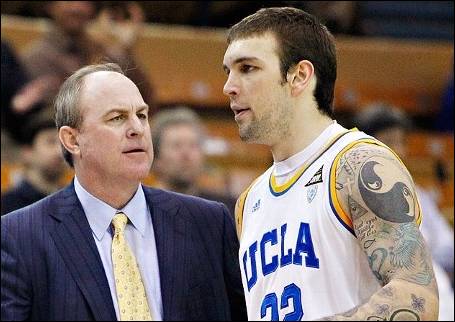
UCLA coach Ben Howland and Reeves Nelson are pictured during a UCLA basketball game.

After leaving UCLA, Nelson played for a pro team in Lithuania for five weeks, returning to await the results of the 2012 NBA draft. When no team selected him, he tried unsuccessfully to catch on with the Los Angeles Lakers, then played in the NBA Development League.
The website LatinBasket reported that he played this year for a team in Nogales, Mexico.
The story claimed Nelson had been involved in numerous incidents in which teammates were physically attacked or otherwise demeaned. He supposedly deliberately injured teammates during practice; urinated on a fellow player’s bed; pulled on a player’s arm, reinjuring the man’s surgically repaired shoulder; knocked another teammate to the ground from behind, injuring his back; and injured another player by elbowing him in the ribs, all of which he denied.
Nelson further denied Dohrmann’s assertion that he had admitted those allegations and apologized for them when he said:
“On all that stuff, I have no trouble admitting that I lost control of my emotions sometimes. I take responsibility for my actions. I’m really just trying to learn from the mistakes I made on all levels.”
Dohrmann and his editor both filed declarations insisting that the story had been carefully and accurately sourced.
Los Angeles Superior Court Judge Lee Edmon, writing for the Court of Appeal while sitting on assignment, agreed with the trial judge that the plaintiff was a limited purpose public figure who must prove actual malice in order to prevail. But Edmon also concluded that Nelson had a prima facie case because if he can prove that he never admitted to or apologized for the alleged misconduct, he will have established falsity and actual malice.
She cited Masson v. New Yorker Magazine (1991) 501 U.S. 496, in which the high court held that a psychoanalyst who had been interviewed by a reporter regarding his relationship with the Sigmund Freud archives had established a prima facie case of defamation, based on evidence that his remarks had been taken out of context and quotation marks used around comments that he had not made.
Edmon wrote:
“Crediting (as we must for anti-SLAPP purposes) Nelson’s account of the interview, we conclude that Dohrmann’s statement that Nelson confirmed some of the incidents described by the article and expressed regret would support a finding of actual malice. As in Masson, the alleged falsity is not the words spoken by Nelson, but the context in which the words are placed. As reported by Dohrmann, Nelson appears to be admitting and apologizing for each of the incidents described in the article. But Nelson says these incidents never happened and more significantly for our analysis that Dohrmann never asked him about them. Although Nelson concedes he made the quoted statement, he says it was in response to Dohrmann’s inquiry as to how he felt about his suspension and expulsion from the team, not an inquiry about the particular incidents described in the article. This difference is material because it significantly changes the meaning of Nelson’s admission and apology. As such, it would support a finding of actual malice.”
The case is Nelson v. Time, Inc., B245412.

The new debtors prisons: Pennsylvania mother dies while jailed for truancy fines

Laura Clawson
Daily Kos staff
Jun 12, 2014

The new debtors prisons: Pennsylvania mother dies while jailed for truancy fines

Jail cell
If you thought debtors prison was something straight out of Charles Dickens—and something long ago left behind us—think again. Debtors prison is becoming very much a part of the American prison-industrial complex, and on Saturday, a Pennsylvania mother of seven died there:
Eileen DiNino, 55, of Reading, was found dead in a jail cell Saturday, halfway through a 48-hour sentence that would have erased about $2,000 in fines and court costs. The debt had accrued since 1999, and involved several of her seven children, most recently her boys at a vocational high school. "Did something happen? Was she scared to death?" said District Judge Dean R. Patton, who reluctantly sent DiNino to the Berks County jail Friday after she failed to pay the debt for four years.
While dying in jail over truancy fees may be rare, going to jail over truancy fees is all too common, and it disproportionately hits women: "More than 1,600 people have been jailed in Berks County alone—two-thirds of them women—over truancy fines since 2000, the Reading Eagle reported Wednesday." Of course it goes without saying that people who go to jail over $2,000 in fines accumulated over years are not wealthy. Increasing court fees get added to fines—DiNino owed money for things like postage and a "judicial computer project"—often creating a cycle of debt owed to the state that it's almost impossible for low-income people to escape, no matter how hard they work to avoid incurring further debt. Somehow the answer our criminal system has arrived at is to spend money jailing people because they owe the system money they cannot afford to pay. And that's why Eileen DiNino died in jail.

Monday, June 9, 2014

Billionaire Gets Four Months for Sexual Assault of a 12-Year-Old Girl


Ironically, this case seems to indicate that girls in wealthy families receive less protection from the justice system than girls in poor families because rich stepfathers must be protected from jail time.

Are you hearing this, women of wealth?  Are your daughters fair game for sexual predators with money? 

It looks like the victim in this case may have been paid not to testify.  Maybe it's time to put some protection for stepdaughters in prenups. 


Mr. Johnson's company owns Windex, Pledge, and Ziplock. 
SC Johnson and Son says it's "goal is to make homes better 
for families."

Billionaire Gets Four Months for Sexual Assault of a 12-Year-Old Girl

Richard Riis
Daily Kos
Jun 08, 2014
 
“Affluenza” has struck again.
Samuel Curtis “S. C.” Johnson III, the 59-year-old billionaire heir to the S. C. Johnson & Sons (formerly Johnson’s Wax) fortune, who confessed to repeatedly sexually assaulting his teenage stepdaughter, has received an prison sentence of only four months from Racine County Circuit Justice Eugene Gasiorkiewicz, citing the Johnson family’s importance in the community.
Johnson pled guilty to mere misdemeanor charges of fourth-degree sexual assault and disorderly conduct instead of felony sexual assault on a minor child. The victim told police Johnson was “a sex addict” and touched her inappropriately 15 to 20 times beginning when she was 12 years old. The stepdaughter has since moved to North Carolina and was unwilling to return to Wisconsin to testify in the case.
Johnson’s attorney, Michael F. Hart, that the maximum prison term for his client was not fair and should be reserved for “maximum defendants,” people unlike his client (read: not billionaires), who has no prior record and who leads a “productive life.”

 [Maura Larkins' comment:  a "productive life"?  Really?  What does Mr. Johnson produce?  Doesn't the lawyer really mean that Mr. Johnson enjoys his life more than other men who rape their step-daughters?  

Isn't he saying that people who are fortunate should be punished less than the average guy?  

Ironically, this case also seems to say that girls in wealthy families deserve less protection than girls in poor families.  Are you hearing this, women of wealth?]

Judge Gasiorkiewicz agreed and gave Johnson a fine of $6,000 and four months in prison. The judge ruled that he must serve at least 60 days of the sentence before he will be eligible for release.
This decision comes fast on the heels of several other high-profile cases in which justice has been perverted in favor of the very wealthy.
It was the case of Ethan Couch that gave us the “affluenza” defense. Couch, the son of a wealthy Texas businessman, fled the scene after he killed four people in a drunk driving accident and received only ten years’ probation from Judge Jean Boyd, thanks to his attorney’s argument that the teen suffered from “affluenza” and failed to grasp the consequences of his actions. Couch is now attending a very expensive, very prestigious rehab center, paid for not by his multi-millionaire parents but by the taxpayers of Texas.
Last month, a Washington state judge failed to sentence wealthy businessman Joshua Shaun Goodman, arrested for his seventh DUI and for leading police on a 100 mph chase through Olympia, that ended when he crashed into a home, to any jail time. The reason? According to Judge James Dixon, giving Goodman jail time “wouldn’t be fair for him.” The judge even gave Goodman permission to travel to New York and attend the Super Bowl while his case was being adjudicated.
Du Pont heir Robert H. Richards IV, had his sentence of eight years in prison for raping his daughter repeatedly between the ages of 3 and 5 as well as molesting his son starting at the age of 19 months, suspended by Delaware Superior Court Judge Jan Jurden. Why? Jurden thought the rapist “would not fare well” in prison. In 2009 Richards was placed on eight years' probation and ordered to attend an inpatient psychiatric program at MacLean Hospital in Massachusetts. As of April 2014 court records show that Richards has yet to appear for treatment.
While it is still a sad fact that justice in America is unequal for black and white, the color the system increasingly panders to most outrageously is green.

Originally posted to Richard Riis on Sun Jun 08, 2014 at 05:23 AM PDT.

Also republished by Badger State Progressive and This Week in the War on Women.