Showing posts with label California Supreme Court. Show all posts

Tuesday, July 26, 2016

U.S. judges say California's top court is jeopardizing constitutional rights


Two federal judges warned Monday that the California Supreme Court’s practice in certain criminal cases was jeopardizing citizens’ constitutional rights.

U.S. 9th Circuit Court of Appeals Judges Jay S. Bybee, a George W. Bush appointee, and Stephen Reinhardt, who was elevated to the court by President Carter, expressed their frustrations in a ruling that will allow a state prisoner to challenge his detention in federal court.

The case dealt with legal deadlines, and the 11-judge appellate panel found itself having to surmise why the California Supreme Court had rejected the habeas corpus filing — the legal means by which inmates can win their freedom.

Bybee complained that communication between the two courts “has devolved into a series of hints that the California Supreme Court obliquely telegraphs and that we struggle to decipher.”

Yet  the 9th Circuit’s difficulties “pale in comparison to the costs that the California Supreme Court’s imprecision imposes on its own citizens and state government, because they have no more clue what the California Supreme Court means than we do,” Bybee said.

Overwhelmed by thousands of challenges from inmates each year, the state Supreme Court decides most of them with one-paragraph summary rulings that frustrate federal judges who later are asked to review them.

In Monday’s case, the 9th Circuit was examining the California high court’s rejection of a challenge by Freddy Curiel, who was sentenced to life without parole for murder. If the state court had found the rejection was due to a missed legal deadline, the federal judges would have to dismiss the inmate’s challenge.

The 2010 order said in its entirety: “The petition for writ of habeas corpus is denied. (See In re Swain (1949) 34 Cal.2d 300, 304; People v. Duvall (1995) 9 Cal.4th 464, 474.).”

Ninth Circuit Judge Mary H. Murguia, who wrote Monday’s majority opinion, said the appellate court had determined that the state justices did not find Curiel’s challenge untimely because neither of the two cases they cited had to do with deadlines.

Reinhardt said in his concurrence that he understood the California high court was overwhelmed with work and strained financially and could not write full-blown rulings on every case. But he implored the court to provide more elucidation and suggested specific reforms.

“Perhaps what was not so long ago the most innovative court in the nation will once again be able to provide national leadership when it considers the problem of the untold numbers of habeas petitions raising substantial claims of federal constitutional violations,” he wrote.

“Without a new approach,” he said, “even clearly erroneous constitutional decisions of state courts will remain uncorrected and leave defendants without the check on constitutional error that until recently the federal courts provided.”

Monday’s complaints about the California Supreme Court’s practice of denying habeas challenges — known as “postcard” denials — have been raised many times throughout the years by 9th Circuit judges.
 
But Reinhardt and Bybee noted that the issue was now more important than ever, because recent rulings by the U.S. Supreme Court require federal courts to defer to state judges except in extremely limited circumstances.

“Until we can tell what the California Supreme Court has decided,” Bybee wrote, “we won’t know how to afford California the deference to which it is entitled.”...

Sunday, September 14, 2014

Chief Justice Tani Cantil-Sakauye's word of the day: "counter-majoritarian"


CA SUPREME COURT'S CHIEF JUSTICE TO SPEAK SEPT. 11 IN SAN DIEGO
East County Magazine
September 10, 2014
(San Diego)

California Chief Justice Tani G. Cantil-Sakauye will be the featured speaker at “Informed Voters—Fair Judges” , a special program on the critical role voters play in preserving our country’s fair and impartial legal system.


Commentary
Word of the day, "counter-majoritarian"
by Sharon Kramer

Yesterday, I attended a meeting [in San Diego] of which the subject matter was "Informed Voters -- Fair Judges".

Chief Justice Cantil-Sakauye was the keynote speaker. In fact, besides her introduction by Justice McConnell and the announcement by a gentleman from UCSD that it was time to mingle, Tani was the only speaker.

According to Tani, her courts are "counter-majoritarian" and must be, to keep the courts "fair and free". She claims that decisions in the branch are made independently -- not by majority rule. Thus, she is practicing "counter-majoritarian" in the name of democracy.

She also stated that Chief Justice Ronald George was a "wonderful, honorable, visionary" and that McConnell has worked with him for a long time to help keep the courts fair and free from outside interests influencing the courts.

[Maura Larkins' comment: Next we need to work on preventing INSIDE interests from influencing the courts. Insiders are able to exercise an extraordinary amount of arbitrary power, in my experience. The Chief Justice could begin to fix this by providing enough money to bring back court reporters for civil cases.]

Then she stated that McConnell also worked with the President of the Cal Chamber of Commerce on the project of ensuring impartial courts. (I laughed out loud at the irony and oxymoron of this statement. Fortunately, I don't think anyone besides those sitting next to me, heard me.)

This Emmy winning short video was played. "Fair and Free"
http://www.youtube.com/watch?v=aTeFLkueTkQ

McConnell and an executive committee that she chairs, authored a pretty good little booklet to teach children of how the courts are suppose to work. Seems to me that it would be beneficial for many if she would also take the time to read it!

The CJ told an anecdotal story of a dinner she had with a legislator who she said would remain nameless. According to her, this legislator said that the trial judges report to the chief justice and the chief justice reports to the legislature.

Moans of sympathetic disgust went out in the crowd of the audacity of the statement by the imperialistic legislator. Parlaying on the audience favorable response, she then stated "and this legislator is a lawyer" and that after he said that, the dinner was over.

I got the impression that she was referring to Governor Brown and I seriously doubt that's what he actually said. I would envision it being more of "Get control of the fraud, waste and abuse in the judicial branch. The Judicial Council is not getting any more money from the legislature until you do."

Basically, it seemed like a cocktail party stop on the campaign trail to garner support for more money for the Judicial Council and their staff to control -- so they can be free to administer justice in the counter-majoritarian manner as taught by the wonderful, honorable, visionary Ron George.

Several San Diego judges and justices were in attendance including Justice Joan Irion, Nationwide Chair, Informed Voters—Fair Judges Project; and the appetizers were outstanding!.

Thursday, June 12, 2014

CA Supreme Court Won't Publish Opinion that Former UCLA Basketball Player’s Defamation Lawsuit May Go Forward


June 12, 2014

Supreme Court Denies Request to Publish Ruling in Former UCLA Basketball Player’s Defamation Lawsuit

By a MetNews Staff Writer

The California Supreme Court yesterday declined to order publication of a Court of Appeal ruling that allows a former UCLA basketball player to sue Time Inc. over a critical story that appeared in Sports Illustrated.
The justices, at their weekly conference in San Francisco, voted unanimously to deny the request by attorneys for Reeves Nelson. While court rules allow the Supreme Court to order publication of Court of Appeal opinions where the panel has denied certification, such requests are rarely granted.
Div. Four ruled March 11 that Nelson had established a prima facie case of defamation and false-light invasion of privacy, and that Los Angeles Superior Court Judge Mary Ann Murphy erred in granting the defendant’s anti-SLAPP motion.
The story by George Dohrmann appeared in March 2012. It said that Nelson, who had been dismissed from the team, was the “ringleader” of a band of undisciplined freshman athletes whom coach Ben Howland couldn’t or wouldn’t control, leading to a failed season.

—AP
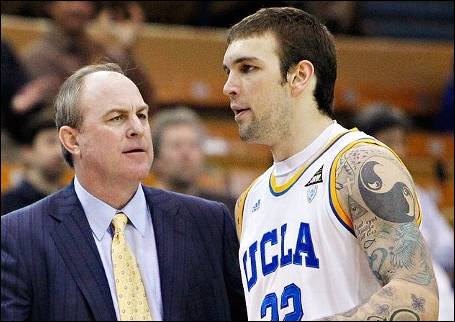
UCLA coach Ben Howland and Reeves Nelson are pictured during a UCLA basketball game.

After leaving UCLA, Nelson played for a pro team in Lithuania for five weeks, returning to await the results of the 2012 NBA draft. When no team selected him, he tried unsuccessfully to catch on with the Los Angeles Lakers, then played in the NBA Development League.
The website LatinBasket reported that he played this year for a team in Nogales, Mexico.
The story claimed Nelson had been involved in numerous incidents in which teammates were physically attacked or otherwise demeaned. He supposedly deliberately injured teammates during practice; urinated on a fellow player’s bed; pulled on a player’s arm, reinjuring the man’s surgically repaired shoulder; knocked another teammate to the ground from behind, injuring his back; and injured another player by elbowing him in the ribs, all of which he denied.
Nelson further denied Dohrmann’s assertion that he had admitted those allegations and apologized for them when he said:
“On all that stuff, I have no trouble admitting that I lost control of my emotions sometimes. I take responsibility for my actions. I’m really just trying to learn from the mistakes I made on all levels.”
Dohrmann and his editor both filed declarations insisting that the story had been carefully and accurately sourced.
Los Angeles Superior Court Judge Lee Edmon, writing for the Court of Appeal while sitting on assignment, agreed with the trial judge that the plaintiff was a limited purpose public figure who must prove actual malice in order to prevail. But Edmon also concluded that Nelson had a prima facie case because if he can prove that he never admitted to or apologized for the alleged misconduct, he will have established falsity and actual malice.
She cited Masson v. New Yorker Magazine (1991) 501 U.S. 496, in which the high court held that a psychoanalyst who had been interviewed by a reporter regarding his relationship with the Sigmund Freud archives had established a prima facie case of defamation, based on evidence that his remarks had been taken out of context and quotation marks used around comments that he had not made.
Edmon wrote:
“Crediting (as we must for anti-SLAPP purposes) Nelson’s account of the interview, we conclude that Dohrmann’s statement that Nelson confirmed some of the incidents described by the article and expressed regret would support a finding of actual malice. As in Masson, the alleged falsity is not the words spoken by Nelson, but the context in which the words are placed. As reported by Dohrmann, Nelson appears to be admitting and apologizing for each of the incidents described in the article. But Nelson says these incidents never happened and more significantly for our analysis that Dohrmann never asked him about them. Although Nelson concedes he made the quoted statement, he says it was in response to Dohrmann’s inquiry as to how he felt about his suspension and expulsion from the team, not an inquiry about the particular incidents described in the article. This difference is material because it significantly changes the meaning of Nelson’s admission and apology. As such, it would support a finding of actual malice.”
The case is Nelson v. Time, Inc., B245412.

Thursday, January 2, 2014

California Grants Law License to Undocumented Immigrant

California Grants Law License to Undocumented Immigrant
ABC News radio
January 2, 2014

(SACRAMENTO, Calif.) -- California's highest court has granted a law license to a man who has been living in the U.S. illegally.

California's Supreme Court has ruled Sergio Garcia, an undocumented immigrant, will be admitted to the state bar after a law went into effect on Jan. 1, giving it the authority to grant exemptions.

Garcia was brought here by his parents as a child, worked his way through college and law school, passed California's bar exam, but hasn't been able to practice law because he's in the country illegally.

Tuesday, December 31, 2013

New Supreme Court case expands access rights, unlocks government data--including California Bar Association records

New Supreme Court case expands access rights, unlocks government data
Peter Scheer, Executive Director
First Amendment Coaltion

Dec. 2013 The First Amendment Coalition won a major victory last week in a test case about government transparency and public access to government data. I'm writing to share the good news and to use the occasion to ask you to make a year-end donation to FAC.

The California Supreme Court, in a unanimous decision, established that no agency of government can exempt itself from the public's right to know. The State Bar—an arm of the judiciary that regulates lawyers—had argued that, since it is not covered by California's FOIA law, it has no obligation to make its records available for public review. The Court's answer: Sorry, but you do!

The Court said the Bar's records--specifically, Bar admissions data needed for academic research on affirmative action---are subject to a “common law” right of access. This right is not limited to records of official actions or records in court cases, but extends to any government records whose “disclosure would contribute significantly to public understanding of government activities,” the Court held.

This revived common law right of access could have a far-reaching impact, potentially providing an alternate remedy whenever state FOIA laws, for a variety of reasons, are of no avail.

But there's more . . .

The Court also held that government data can’t be withheld on privacy grounds as long as the data are “de-identified” by stripping out identifiers, controlling data cell sizes, and other steps that have become standard in professional research. The Court’s reasoning: There is no conflict between privacy rights and public access rights when the disclosed data can’t be linked to identifiable individuals.

This aspect of the Court's decision settles a central issue in debates over public access to, and use of, government data that pertain to private individuals---an issue that comes up in many contexts. The Court's holding is a powerful tool for unlocking government databases.

Our victory comes after a long battle with the State Bar—a battle that may drag on, unfortunately, if the Bar chooses to contest the procedures proposed by FAC and our co-plaintiff, UCLA Professor Richard Sander, for de-identifying the Bar's admissions data.