Showing posts with label false accusations. Show all posts

Sunday, February 14, 2016

Man freed after 28 years; witness claimed his face appeared in a dream

Moses-EL was convicted after the victim identified him, saying his face came to her in a dream. So prosecutors ignored the convicted rapist she had originally named.  

Prosecutors in Denver, Colorado are still considering trying Moses-EL again for the rape.


Man Held Decades in Colorado for Rape He Denies WalksFree
Dec 22 2015
by The Associated Press

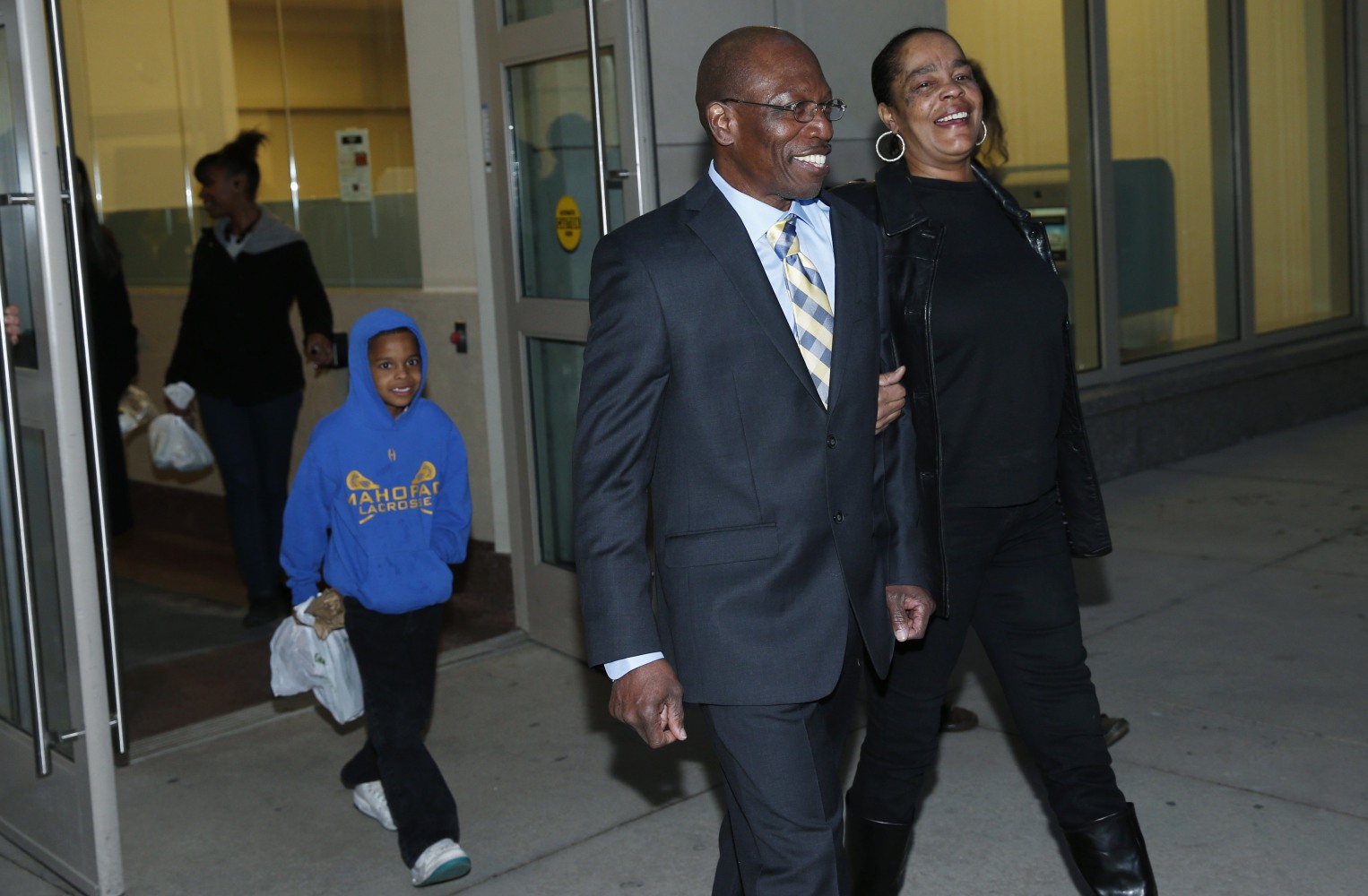
A Denver man who spent more than a quarter-century in prison for an attack he denies committing walked free Tuesday, locking arms with his wife as his tearful children applauded and his grandkids embraced a man they had never met. 

Clarence Moses-EL, 60, had just posted a $50,000 bond that a judge required for his freedom after she overturned his 1988 conviction on rape and assault charges and found that he would likely be acquitted if his case went to trial again. Moses-EL was convicted after the victim identified him, saying his face came to her in a dream. 


When police initially asked her who assaulted her, she named another man, who later confessed to having sex with her at the same time that night. 

Man's Rape Conviction Overturned After 28 Years 

Outside the jail Tuesday, Moses-EL wore a black suit and tie as he stood beside his wife, Stephanie Burke, moments after hugging three of his 12 grandchildren for the first time. 

Surrounded by his tearful children, he took a deep breath of the crisp late afternoon air.
"This is the moment of my life, right here," Moses-EL told reporters. "I'm at a loss for words. I just want to get home to my family."

Moses-EL has long maintained his innocence, and his case inspired legislation requiring preservation of DNA evidence in major felony cases for a defendant's lifetime after police threw out body swabs and the victim's clothing. Supporters posted bond for his release after Moses-EL was transferred from the prison where he was housed for decades..

His spirituality kept him from losing hope during 28 years of his 48-year sentence, he said.
"And my innocence," he said. "That's what really kept me going." 

But still looming was the prospect of a new trial. Prosecutors have not decided whether to try Moses-EL again, saying they are considering the age of the case and the availability of witnesses. A tentative trial date was set for May, if prosecutors decide to pursue new charges. 

The case involved a woman who was attacked after she returned home from a night of drinking. When police initially asked who assaulted her, she named the man who later confessed to having sex with her. 

More than a day after the assault, while in the hospital, the woman identified Moses-EL as her attacker, saying his face appeared to her in a dream. 

Moses-EL's efforts to appeal his conviction were unsuccessful and the legal and political system repeatedly failed him in his decades-long attempt to win his freedom. 

He won a legal bid for DNA testing on the evidence to clear his name, but Denver police threw it away, saying they didn't see any notice from prosecutors to hold on to it. 

In 2008, the governor, a former Denver prosecutor, objected to legislation that would have given him a new trial and that received widespread support from lawmakers. 

Moses-EL's break came when L.C. Jackson, whom the victim had initially identified as her rapist, wrote to Moses-EL in 2013 saying he had sex with the woman that night. Jackson has not been charged in this case but is imprisoned for two other rapes in 1992. 

His attorney, Eric Klein, said it would be foolish for prosecutors not to dismiss the case against an innocent man…

Monday, November 23, 2015

Convict in 3 sex crimes freed by DNA tied to fugitive rapist

 Convict in 3 sex crimes freed by DNA tied to fugitive rapist

November 23, 2015 
LOS ANGELES (AP) — A man imprisoned 16 years for rape and sex assault convictions was exonerated Monday and ordered freed after DNA evidence linked the crimes to a serial rapist on the FBI's most wanted list.

Los Angeles Superior Court Judge William Ryan granted a petition supported by prosecutors to release Luis Vargas, who was serving a sentence of 55 years to life in prison for three sexual assaults.

Vargas broke down, placing his hand to his forehead and covering his eyes as the judge ordered the case dismissed during the brief hearing packed with family and law school students who had worked to free him...

Lawyers and students for the innocence project at California Western School of Law took up the case after Vargas got in touch in 2012 and said he thought he was wrongly convicted of crimes that were the work of the so-called Teardrop Rapist.

The notorious predator known for a tattoo of a teardrop under his eye has been linked by DNA to 11 crimes and is suspected of 35 in total across the Los Angeles area, the innocence project said. Vargas has a similar tattoo.

Vargas had insisted on his innocence all along, telling the court at his 1999 sentencing that he was concerned the individual who "really did these crimes might really be raping someone out there, might really be killing someone out there."

In cases dating back to 1996, the Teardrop Rapist approached girls or women in the early morning walking to school or work, pulled a weapon such as a gun or knife, forced them to a secluded area and sexually assaulted them, officials have said.

Police in 2012 released several sketches of the suspect they described as a light-skinned Hispanic man between 40 and 55 years old.

His most striking characteristic is the tattoo some victims have reported seeing on his face, though there are conflicting reports about which eye it is under or whether there is more than one tear.

Vargas was convicted of kidnapping, forcibly raping and sodomizing one woman and attempting to rape two others between February and June 1998.

DNA testing methods were not as sensitive at the time of the trial and the convictions hinged on positive identifications by the three victims.

Prosecutors said the three assaults were so similar, they were "signature crimes" that could only be committed by the same person. The women all corroborated each other by pointing to Vargas, who had a previous rape conviction.

The judge noted that their initial identifications, however, were tentative and inconsistent in describing their assailant.

"This was a shaky witness identification case," said attorney Alex Simpson, of the California Innocence Project. "This happens all the time. It is the No. 1 factor in wrongful convictions across the country."
Jurors disregarded Vargas' alibi witnesses, including the manager of a bagel shop, who said he was working there the mornings of the attacks.
With improved technology, his lawyers were able in show that genetic evidence from the forcible rape was linked to the Teardrop Rapist and not Vargas.
Prosecutors conceded it was a case of mistaken identity and that new evidence pointed "unerringly to innocence," Deputy District Attorney Nicole Flood said in a letter to the judge.
Vargas' daughter, who was 10 when he was taken away, said it was hard growing up without a father and she often cried herself to sleep, but she never quit believing in him...

Thursday, February 12, 2015

Why is Darren Chaker stalking Maura Larkins--even though the conditions of his release from federal prison forbid it?


Related story: Completely false allegations made in an effort to banish woman from California school (Article about a situation similar to the story below; the accusers were the ones who ended up in jail when two parents at an Irvine, California elementary school tried to destroy the reputation of a parent volunteer)  See also The Letter that got Maura Larkins fired regarding Castle Park Elementary School in Chula Vista.

Why is Darren Chaker so interested in Maura Larkins?

by Maura Larkins
Jan. 24, 2015

In San Diego, Darren Chaker, who is currently on supervised release from federal prison for bankruptcy fraud, is stalking me (teacher/blogger Maura Larkins).  As his rap sheet makes clear, Chaker doesn't let honesty interfere with his efforts to achieve his goals.

Why is this man so interested in me?

Darren Chaker has been sending letters about me to people on my street. Some of us are a little bit nervous, since Mr. Chaker has a troubling law enforcement record.

It seems clear that Darren Chaker got interested in me because I reminded him
of Wendy Mateo, the grandmother of his child.  A few years ago Chaker sued Mateo for calling
him a "deadbeat dad".   His suit was thrown out as a "SLAPP" by San Diego
Superior Court.

In July 2011, Chaker was appealing his loss to the Court of Appeal.

At the same time, I was appealing a ruling by Judge Judith Hayes, who ordered
me never to speak or write the names of Stutz, Artiano Shinoff & Holtz law firm or
any of its attorneys.

My case was clearly very similar to the Mateo case.

Mr. Cahker sat down next to me at the Court of Appeal in July 2011 on the day
that attorney Shaun Martin presented winning arguments in my case.

I spoke to Chaker for a while, then I moved to the front row of the gallery.

My friend remained seated near Chaker.  She reported to me that Mr. Chaker
became very disturbed as he listened to the oral arguments and the comments
of the judges.  I suspect that Mr. Chaker was upset because it seemed likely
that the judges were going to come down on the side of free speech.

If that is what he believed, he was right.

On August 5, 2011 the California Court of Appeal in San Diego ruled that Judge
Hayes' injunction permanently forbidding me from mentioning the name of Stutz
law firm, either orally or in writing, was "exceedingly unconstitutional."

As I walked out of the Court of Appeal after oral arguments, I was approached by
Darren Chaker.

From the FBI website:
Man Sentenced to Federal Prison for Bankruptcy Fraud
U.S. Attorney’s Office
Dec. 17, 2013
HOUSTON—Darren David Chaker, 41, of Beverly Hills, California, and Las Vegas, Nevada, has been ordered to federal prison following his conviction of bankruptcy fraud, announced United States Attorney Kenneth Magidson. Chaker was found guilty April 4, 2013, following a five-day bench trial before U.S. District Judge Nancy Atlas.

Today, Judge Atlas sentenced Chaker to a term of 15 months in prison, to be immediately followed by a three-year-term of supervised release. He was further ordered to pay a $2,000 fine. As part of the sentencing, Judge Atlas included special conditions that he not stalk or harass anyone and obtain mental health counseling and anger management...


A sampling of Darren Chaker cases: 
Wendy Mateo
Chaker v. Crogan
Zaya v. Chaker
 
Mr. Chaker advised me to take down my website in exchange for the law firm's
agreement to not to make me pay attorney's fees.

I told Mr. Chaker that I would rather go to jail. He said, "I'm just advising you to do
this because they are so nasty."

Then Mr. Chaker went over to two members of the Plaintiff's law firm, and walked
out of the courtroom chatting with them! I do not believe that they had asked him
to approach me.  I believe he hatched the plan all by himself.

I reported the Court of Appeal incident with Mr. Chaker on my blog, thus apparently earning the ire of a man who is widely known for dishonest, malicious and aggressive behavior.

Mr. Chaker seems to have became even more enraged when he lost the appeal in the Mateo case.

He makes bizarre accusations about all sorts of people.  He refuses to acknowledge that Chula Vista
Elementary School District desperately tried to get me to go back to work after I
had been viciously harassed by Robin Donlan and other teachers at Castle Park Elementary.

I refused to go back to work without an investigation into the harassment I
suffered.  The district refused to produce a report on the "investigation" it claimed
to have initiated.

I was fired for "insubordination" because I refused to go back to work.  Here are
the charges against me.


Darren Chaker fails to mention that Robin Donlan and other teachers who
harassed me were transferred out of Castle Park Elementary when the district
realized that it had made a mistake by paying huge amounts of taxpayer money to
defend teachers who had behaved unlawfully.

Castle Park Elementary was out of control, with a $20,000 PTA embezzlement by Kim Simmons,
a parent who was a close associate of Robin Donlan.  The school was almost ungovernable as 11 principals in 11 years struggled to create a professional working climate.


Complaint board on Darren Chaker 

Blog posts on child molestation

Monday, January 12, 2015

Judge to Make Niro Firm Pay Millions in Sanctions Over False Declarations


Judge to Make Niro Firm Pay Millions in Sanctions Over False Declarations
Scott Graham
January 9, 2015

SAN FRANCISCO — An Illinois federal judge has sanctioned Raymond Niro Sr. and his law firm in a wireless patent case, finding that Niro and three of his colleagues knew about a client's false declarations to the U.S. Patent and Trademark Office before filing a lawsuit on his behalf.
U.S. District Judge William Hart on Friday held Niro, Haller & Niro jointly and severally liable for what's likely to be several million dollars in attorney fees assessed against Intellect Wireless and inventor Daniel Henderon. The ruling ends a year of hotly contested wrangling over what Niro did and didn't know, delivering a black eye to one of the country's most prominent patent lawyers.

"The false presentation of Henderson's activity and knowledge justifies making Niro jointly and severally liable with IW for attorney fees and costs," Hart wrote in his order.

Niro did not immediately respond to an email seeking comment Friday evening. Niro, partners Paul Vickrey and David Mahalek and former partner Paul Gibbons have filed declarations saying they knew nothing about an email Henderson sent to his patent prosecutor in 2007 raising loud alarms about false declarations filed with the PTO. Henderson had warned that false declarations filed on his behalf presented a "potentially lethal blow" to his patent portfolio, and asked that his litigation counsel at the Niro firm be consulted about it.

HTC Corp. and its attorneys at Sheppard Mullin Richter & Hampton say it was "inconceivable" that Niro and his colleagues didn't hear about Henderson's concerns long before suing HTC in 2009.
Hart sided with HTC on Friday, concluding from the Niro firm's unwillingness to produce certain documents in discovery that the lawyers knew Henderson had lied about his invention at least by 2009, "if not before."

"Therefore, Niro is liable for all reasonable attorney fees and expenses incurred by HTC," Hart wrote.
HTC has asked for $4.7 million, plus additional fees for briefing the fee motion...

Read more: http://www.therecorder.com/id=1202714649438/Judge-to-Make-Niro-Firm-Pay-Millions-in-Sanctions-Over-False-Declarations#ixzz3OcTpq0GP

Tuesday, November 25, 2014

The officer asked Chris Craig for his gun and Chris' friend advised, "Let him have it."


Overeager prosecutor's  managed to get Derek Bentley hanged for murder.  He has since been pardoned.
 
 
Before Doctor Who, Chris Eccleston played a man facing an odd murder rap


Let Him Have It (1991)

Many criminal cases over the years have turned on fine points of evidence, but the 1952 prosecution of Derek Bentley for the murder of Police Constable Sidney Miles may be the only instance in which life or death came down to a question of grammatical ambiguity.

The facts were uncontested: Bentley, who’d participated in a burglary with his friend Christopher Craig, was already in police custody when the fatal shot was fired—by Craig.

During the standoff, however, as the police ordered Craig to surrender his gun, Bentley yelled “Let him have it, Chris!”

Craig subsequently shot one policeman in the shoulder and another, Miles, in the head, killing him instantly. As a juvenile (age 16), Craig couldn’t receive the death penalty, but Bentley, who was 19, could.

 Prosecutors argued that “Let him have it!” meant “Open fire!” and that Bentley, by egging Craig on, was just as responsible for the murder as if he’d pulled the trigger himself.

The defense, on the other hand, maintained that Bentley, whose I.Q. was estimated at 77 (“borderline feeble-minded,” in the parlance of the era), was merely instructing Craig to give the gun to the officer who was requesting it. Convicted of murder, Bentley was hanged to death on January 28, 1953.

Peter Medak’s 1991 drama Let Him Have It, starring Chris Eccleston as Bentley and Paul Reynolds as Craig, openly sympathizes with the now-prevailing view that Bentley was railroaded. (Two years earlier, Elvis Costello had revived interest in the case via the song “Let Him Dangle,” which opens with the lines “Bentley said to Craig / ‘Let him have it, Chris!’ / They still don’t know today just what he meant by this.”) Medak, whose most celebrated films include The Ruling Class (1972) and Romeo Is Bleeding (1993), had previously made another, much more violent true-crime saga, The Krays (1990), which tells the story of England’s most notorious gangsters (immortalized by Monty Python as the Piranha Brothers, Doug and Dinsdale). Let Him Have It, by stark contrast, finds Medak in a despairing mood, depicting a tragedy that begins long before a jury chooses to assign an improbably malevolent interpretation to Bentley’s fateful words. Even Craig, the ostensible criminal mastermind and actual gunman, is essentially just playing at cops and robbers as a means of escape from intolerably dismal living conditions. Bentley was posthumously pardoned by the Crown in 1998, but while Let Him Have It no longer has an urgent mission, it’s an agonizingly sober film, still capable of inspiring righteous outrage on behalf of squandered lives.
Availability: Let Him Have It is available on DVD, which can be obtained from Netflix or your local video store/library, or to rent or purchase from the standard digital services.

Saturday, November 22, 2014

Ohio Men Wrongly Convicted of Murder After 39 Years Released


Two Ohio men wrongly accused of murder experienced freedom for the first time in nearly four decades on Friday morning, but said they don’t harbor bitterness over their unjust imprisonment.
A Cleveland judge on Wednesday had dropped all charges against Ricky Jackson, 57, and Wiley Bridgeman, 60, allowing for the pair’s release. 

Jackson was 19 when he was convicted along with Bridgeman and Bridgeman’s brother, Ronnie, in the 1975 shooting death and robbery of Harold Franks, a Cleveland-area money order salesman. 

Testimony from a 12-year-old witness helped point to Jackson as the triggerman and led a jury to convict all three. Ronnie Bridgeman, now known as Kwame Ajamu, was paroled from prison in 2003. 

The witness, Edward Vernon, now 53, recanted his testimony last year, saying he was coerced by detectives, according to Cuyahoga County court documents. Vernon wrote in a 2013 affidavit that he never saw the murder take place, but he was told by detectives that if he didn’t testify against Jackson, his parents would be arrested.
Vernon said he confided in a pastor several years after meeting with Bridgeman, and the pastor encouraged him to reach out to the Innocence Project. Vernon wrote that he had “been waiting to tell the truth about this for a long time.”
“A lot of people think I should be mad,” said Jackson, but “in ’75, he was a 12-year-old-kid.” Jackson said “it took a lot of courage” for the witness to recant his statement.
The Ohio Innocence Project, which took up the case, said Jackson had been the longest-held U.S. prisoner to be exonerated. 
Jackson was originally sentenced to death, but that sentence was vacated because of a paperwork error. The Bridgeman brothers remained on death row until Ohio declared the death penalty unconstitutional in 1978.
“One of them came within 20 days of execution before Ohio ruled the death penalty unconstitutional” said Mark Godsey, director of the Ohio Innocence Project.
“The bitterness is over with,” said Wylie Bridgeman during his first moments of freedom on Friday.
Jackson agreed. “I had plans for my life,” but “time is just something that you can't get back so I'm not going to really cry about it,” he said.
While Ohio provides compensation for those who are wrongfully imprisoned, everyone is not guaranteed money. The Ohio Innocence Project has set up a fund for Jackson.
A story published in Scene Magazine in 2011 first raised new questions about the murder and whether Jackson and the Bridgeman brothers actually committed the crime.
Cuyahoga County Prosecutor Timothy McGinty said in court Tuesday that without an eyewitness there was not much of a case. “The state is conceding the obvious," he said, according to Reuters.
NBC News' Emmanuelle Saliba contributed to this report. Reuters also contributed.
byline photo

Cynthia McFadden

Cynthia McFadden is the senior legal and investigative correspondent for NBC News. Before joining NBC... Expand Bio

Longest Wrongful Incarceration in California History – First of the California 12 To Be Released

Michael Hanline’s Conviction Reversed – Release Expected Monday
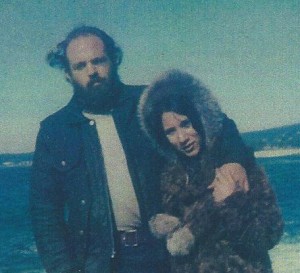
Michael Hanline and his wife before wrongful conviction
Michael Hanline and wife Sandee – 1974
California Innocence Project Client’s Conviction Reversed After 36 Years
Longest Wrongful Incarceration in California History – First of the California 12 To Be Released
Ventura, November 18, 2014 – A judge has overturned the conviction of Michael Hanline, convicted of a murder that was committed in 1978, after lawyers from the California Innocence Projectand the Ventura County District Attorney’s Office agreed that documents were withheld from Hanline at his original trial showing that others may have been responsible for the crime.
Additionally, new DNA evidence pointing to Hanline’s innocence undermined the District Attorney’s confidence in the conviction.
At 36 years, this ends the longest wrongful incarceration in
California history.
Hanline was wrongfully convicted of the shooting death of
victim J.T. McGarry in 1980. At the time, prosecutors argued Hanline was jealous of McGarry because the two were romantically involved with the same woman, and that Hanline and an accomplice killed McGarry in revenge. Hanline has always claimed others were responsible for the murder, and that he had been wrongfully accused.
The California Innocence Project began looking into Hanline’s case in 1999, the year the project was founded, and fought for years to obtain evidence from the 1978 murder. Finally, in 2008 a federal magistrate ruled that his conviction should be overturned. Unfortunately, another federal judge overruled the reversal. Hanline’s case seemed to be over, and his only other option appeared to be the granting of clemency from the Governor. His case was one of the California 12—twelve cases where innocence clemency petitions were presented to Governor Brown 18 months ago after a 712 mile Innocence March from San Diego to Sacramento by lawyers from the California Innocence Project.
“DNA testing recently conducted shows that another individual committed this crime and proves Mike’s innocence,” said Justin Brooks, Director of the California Innocence Project at California Western School of Law and one of the lawyers who walked 712 miles in the Innocence March. “It’s amazing that Mike will finally be released after 36 years of wrongful incarceration. It’s time for him to get back to his family and his life.”
“I’m so pleased that the Ventura County District Attorney’s Office agreed to examine the case and join us in the petition to reverse the conviction,” said Alex Simpson, Associate Director of the California Innocence Project at California Western School of Law and the attorney who argued the petition. “This is how cases should be resolved.”
Hanline will appear before Judge Donald Coleman of the Ventura County Superior Court on November 24 where he is expected to be released.
About the California Innocence Project
The California Innocence Project is a California Western School of Law clinical program dedicated to the release of wrongfully convicted inmates and providing an outstanding educational experience for students enrolled in the clinic. The California Innocence Project receives approximately 2,000 claims from inmates each year and has earned the exoneration of 11 wrongfully convicted clients since its inception.

Friday, October 10, 2014

Los Angeles woman freed after spending 17 years in prison for murder she didn't commit


Los Angeles woman freed after spending 17 years in prison for murder she didn't commit
NEW YORK DAILY NEWS
October 10, 2014
After 17 very long years of proclaiming her innocence, a Los Angeles woman was finally freed Friday by a judge who ordered her immediate release from behind bars.

"I believe that not only is Ms. Mellen not guilty, based on what I have read, I believe she is innocent," said Superior Court Judge Mark Arnold. "For that reason, I believe in this case the justice system failed."

Susan Mellen wept as the judge spoke, as did her grown children seated in the courtroom.
Then applause erupted.

The poignant moment culminated nearly two decades of battling for her freedom. Mellen was sentenced to life without the possibility of parole for the 1997 killing of a homeless man named Richard Daly.

Mellen had once dated the man.

Deidre O'Connor, who investigated Mellen's case for Innocence Matters, said her murder trial was completely based on the testimony of a woman who was notorious for giving bad tips to police.


June Patti, who died in 2006, testified she heard Mellen confess to the murder.

But three gang members were later linked to the killing, and one was ultimately convicted of the crime.

Mellen's children were age 7 and 9 when she was sent away.

"Although each member of this family suffered tremendously, they remain a close family unit," O'Connor said.

With News Wire Services

Friday, September 12, 2014

Attorney Convicted of False Imprisonment for Planting Drugs in School Volunteer's Car

Kent Easter isn't the only attorney who thinks he's above the law, but he takes the concept to a new extreme of pettiness and irrationality.

Attorney Convicted of False Imprisonment for Planting Drugs in School Volunteer's Car
By deceiving police, Kent Easter caused Kelli Peters to be detained and questioned, a prosecutor said. Peters had insulted Easter's son.
By PAUL ANDERSON City News Service
Updated by By Penny Arévalo (Patch Staff)
September 10, 2014

An Irvine attorney who helped plant drugs in the PT Cruiser of a school volunteer because of a perceived insult to his son was convicted today of false imprisonment by fraud and deceit.

It was the second trial for Kent Easter, who faces up to three years in prison. Another jury last November deadlocked 11-1 in favor of convicting him, forcing a mistrial. Jurors this time around deliberated about an hour before returning a verdict.

His wife pleaded guilty last year to false imprisonment for her role in the smear attack and was sentenced to 120 days in jail and 100 hours of community service. She was released from jail earlier this year after completing her sentence and had her law license suspended in March.

Orange County Superior Court Judge Thomas Goethals ordered Easter back to court Thursday afternoon to set a sentencing date. Goethals was inclined to have the defendant handcuffed and sent to jail today, but he asked for more time to make arrangements for the care and custody of his three children, ages 7, 8, and 11.

Goethals questioned why Easter had not made arrangements prior to today, considering the first jury nearly convicted him. Easter, 40, and his attorney argued that his 41-year-old estranged wife was “spiraling down” emotionally.

The couple are in the midst of a divorce. Kent Easter is living in Newport Beach while Jill Easter lives with their children in their Irvine home, according to defense attorney Thomas Bienert Jr....

The jury foreman said the panel was convinced by phone records that showed the defendant’s cell phone was used near the victim’s home the night the drugs were planted in her car. The jury did not believe the defendant’s claim that his wife was using his phone that night, the foreman said.

Prosecutor Christopher Duff said in his closing argument that even if the defendant did not personally plant the marijuana pipe, Vicodin and Percocet in school volunteer Kelli Peters’ car on Feb. 16, 2011, he was still guilty of false imprisonment because it was his call to police that led to her detention and questioning.

“He called police knowing these drugs were planted in the car,” Duff said. “He knew Kelli Peters didn’t put those drugs in the car. His role in the crime is complete when he makes that call to police.”

Easter’s attorney claimed that his client was an unwitting dupe of a conspiratorial, pushy wife, and downplayed the detention of the victim, as Irvine police realized within minutes the volunteer was being set up.

Duff said the Easters’ vendetta against Peters started in February 2010 when Jill Easter picked up her then-5-year-old son after classes at Plaza Vista School in Irvine. It took a few minutes to find the boy, who was a little dirty and crying when he was found but was otherwise OK, Duff said.

Jill Easter grew enraged when Peters said the boy was “slow,” meaning he lagged when it was time to line up with the other children, Duff said. Jill Easter took the comment as an insult to her son’s intelligence, Duff said.

The couple wrote a letter demanding Peters’ dismissal, filed for a restraining order against her, and then tried to file a complaint with police for false imprisonment, Duff said. They also tried to sue Peters, but she was not served with papers and the case was withdrawn.


Kent Easter admitted he called Irvine police and gave them a fake Indian name after he alerted authorities that Peters was seen driving to the school erratically and had pills in her car. Duff alleged that Easter even affected an Indian accent...

See more details HERE.

Sunday, September 7, 2014

Prosecutor Joe Freeman Britt, no longer admired for record-breaking number of Death Row convictions

As 2 Go Free, a Dogged Ex-Prosecutor Digs In


LUMBERTON, N.C. — The most memorable moment of the trial that put Henry McCollum and Leon Brown behind bars for three decades for a hideous 1983 rape and murder was a display of brilliant courtroom theatrics.

District Attorney Joe Freeman Britt of Robeson County, who stood 6-foot-6 and came to be known as America’s “Deadliest D.A.,” asked jurors to try to hold their breath for five minutes — the time it took the 11-year-old victim to choke to death, after her killer stuffed her panties down her throat with a stick — to get a small sense of the horror she experienced.

The jury came back with two of the more than 40 death penalty convictions Mr. Britt won over almost two decades.


Those two convictions — obtained on the basis of inconsistent, soon recanted, confessions from two mentally impaired teenagers who said they had been coerced to sign statements written by interrogators, and testimony from an informer who previously did not implicate the two young men — were overturned last week. Mr. McCollum and Mr. Brown were exonerated and set free.


Photo

Leon Brown in his death row cell block in 1987. Credit Scott Sharpe/The News & Observer, via Associated Press

Their release concluded a judicial horror story in which the two men were sent to death row though no physical evidence linked them to the murder, while a serial sex offender who lived less than 100 yards from the crime scene — and who, a few weeks after that murder, would kill a teenage girl nearby in strikingly similar circumstances — was never pursued as a suspect.

But if the case was finally closed, the episode reopened ugly memories of what critics say was a merciless criminal justice system that ran roughshod over helpless people for decades in this poor, sprawling, racially volatile county sometime known as the Great State of Robeson.
At the heart of that is the legacy of Joe Freeman Britt, who earned a spot in “Guinness World Records” and a “60 Minutes” profile for his prowess in sending people to death row. (Only two were eventually executed. The most infamous was Velma Barfield, 52, who died from lethal injection in 1984 for killing her fiancé by poisoning his beer.)

And whereas Mr. Britt, now 79 and retired, once dominated this county and won headlines for convictions, now some on both sides of the courtroom see a different tale.

The current district attorney, Johnson Britt, whose grandfather was first cousin to Joe Freeman Britt’s father, suggested that his predecessor could be tyrannical.

“He is a bully, and that’s the way he ran this office,” he said. “People were afraid of him. Lawyers were afraid of him. They were intimidated by his tactics. And he didn’t mind doing it that way.” He added: “You treat people with dignity, and you can get a whole lot more done that way than you can by trying to run over people. And that’s part of his legacy, that he ran over people.”
In a subsequent interview, Joe Freeman Britt made it clear that Johnson Britt was not his kind of prosecutor, either.

“Well, let’s say, if I was a bully, he is a pussy. How about that?” the elder Mr. Britt said...

Read more.

Friday, March 14, 2014

Astronaut's mom helps overturn murder conviction


Joyce Ride

Astronaut's mom helps overturn murder conviction
By Thom Patterson
CNN
March 14, 2014

Sometimes the act of one person can alter the entire course of someone else's life. For Joyce Ride, that act was befriending a prisoner named Gloria Killian. Their friendship marked the beginning of an amazing journey for both women.

Private eye finds jaw-dropping proof of a plea deal for testimony

(CNN) -- After almost 17 years in prison, this was it: This was The Moment.

Gloria Killian's murder conviction had been overturned. Carrying a small bag of her belongings, she walked out of prison as a free woman.

Only ex-prisoners can fully know the emotions that overtake someone during such a moment. It's a mix of two feelings: joy -- for surviving their ordeal -- and fear about the challenges they surely will face in the outside world.

For Killian's friend Joyce Ride, then in her late 70s, picking up Killian was also very emotional. "Seeing her walk out was a really great joy," Ride told CNN, recalling that day in 2002. "It was like a load was lifted off my shoulders."

Murder case breakthrough: The letter (VIDEO)

The two women noticed a crowd of inmates and visitors had gathered to watch this magic moment. Suddenly the inmates started waving goodbye.

The sendoff was sort of a thank-you note. "Gloria was very popular," Ride said. Killian had used her education as a former law student to perform legal work for some of the inmates.

Killian settled into Ride's passenger seat and Ride steered toward the exit. "We did a lap around the parking lot to wave back at them," said Ride.

Half an hour later, the two friends enjoyed a meal at an Italian restaurant, where Killian savored her first glass of wine since 1986. For someone sentenced to 32 years to life, it was a sweet victory following a hard-fought journey.

Six suitcases of silver

It all started in 1981, when Stephen DeSantis -- disguised as a phone repairman -- entered the home of elderly coin collector Ed Davies and his wife, Grace, in suburban Sacramento, California. According to the Ninth U.S. Circuit Court of Appeals, DeSantis tied up the couple and was joined inside the house by his cousin Gary Masse. Ed Davies was shot and killed. His wife was also shot, but survived. The cousins stole six suitcases of silver.

After an anonymous phone tip accused Masse and DeSantis, police went on the hunt. "When officers attempted to find Masse, they encountered his wife, Joanne, who told the officers that a woman named Gloria planned the robbery," appeals court documents said.

Killian was a former law student in her 30s who'd never been in trouble with the law. Masse's wife told police her husband had met Killian through a mutual friend, according to Killian's book, "Full Circle." Police questioned Killian and held her without bail for about four months.

She told police she was innocent and had never met Masse, and was released for lack of evidence. Then, without warning a year later, police locked Killian away again without bail. Masse had suddenly told authorities that Killian was the crime's mastermind.

For a time, the death penalty loomed over Killian, but in 1983 the California Supreme Court changed the rules regarding the execution of accomplices to murder. That ruling made Killian eligible for bail until her trial began, more than two years later.

Although Masse implicated Killian at the trial, his cousin DeSantis had testified at his separate trial that "Killian was not involved in the crime in any way and that he had never even met or heard of Killian," according to court documents.

But the jury believed Masse's story and convicted Killian on charges of murder, robbery and conspiracy. She was locked up at the California Institution for Women prison at Chino.

'She probably wasn't a criminal'

It wasn't until the early 1990s that Joyce Ride came to the rescue.

She was visiting women inmates as a member of Friends Outside, one of many nonprofits across the nation that help inmates and their families cope with incarceration and transitioning to and from prison life. By supporting prisoner visits by friends and family members, Friends Outside says, it reduces stress among prisoners, preventing despair and unhealthy behavior.

Ride had already raised two daughters as a California housewife. One had grown up to become a Presbyterian minister. The other, the late Sally Ride, had become NASA's first woman astronaut.

I'm annoyed by injustice. Profoundly annoyed. --Joyce Ride, prison volunteer

A nun who volunteered by visiting women in jail inspired Ride to learn more about why so many women who are victims of domestic abuse end up in prison. After her husband died, Ride began dedicating many of her days to visiting incarcerated women. "It interested me," she said.

Ride's younger daughter, the minister, understood. But it confused her astronaut daughter. "Sally couldn't figure out why I was visiting prisons," Ride said. Compared to her work at NASA, she said, "it was a whole other world."

It was pure coincidence that Joyce Ride met Killian in prison. They hoped to work together to help women inmates who had suffered from domestic violence.

"Gloria had a good sense of humor and we just got along very well," Ride remembered. After about a year of visits, "it dawned on me she probably wasn't a criminal. So I asked her why she was there."

Killian told Ride her story.

Ride was convinced Killian was innocent. She felt that she had to do something.

Despite Killian's objections, Ride started financing a private investigation and legal battle that eventually would win Killian's freedom.

"I was willing to be stubborn and do what it takes," Ride said. "Of course when I started out I didn't know what it was going to cost." The decade-long battle cost Ride about $100,000. She sold stocks to raise money for Killian's defense and had to pay taxes on that income, she said.

Ride's private investigator, Darryl Carlson, uncovered a damning piece of evidence:

It was a letter that proved the prosecution's star witness, Masse, had struck a deal. In exchange for leniency, Masse testified that Killian was the master planner of the home invasion and murder.

Killian's prosecutor had never shared that letter with Killian's lawyers during the original trial.

Read the prosecutor's letter

In hopes of overturning the conviction, Killian's lawyers used this and two other letters to appeal to the U.S. Ninth Circuit Court of Appeals.

Circuit Judge Michael Daly Hawkins wrote that the letters "exposed Masse's motivation to lie and tended to show that he did lie." The letters made Masse's testimony worthless and "without it, there was no case," Hawkins wrote.

Hawkins noted that one of the other documents discovered by Killian's team was a letter Masse "wrote to the prosecutor shortly after Killian's trial in which he emphasized that he 'lied (his) ass off on the stand' for the government."

Read the official transcript of Masse's letter

Read the opinion of the Ninth U.S. Circuit Court of Appeals

Eventually, prosecutors dismissed the charges against Killian.

The ordeal was over.

But not before Killian had spent nearly two decades behind bars.

Housemates

In 2008, State Bar of California prosecutors brought "prosecutorial misconduct" disciplinary charges against the prosecutor, Christopher Cleland. The court ruled Cleland was "culpable of failing to disclose exculpatory evidence (one letter) to the defense..." As a result, the court determined Cleland should receive an "admonishment" — which is considered neither discipline nor exoneration.

Read the California State Bar Court's decision

Now, a dozen years after her release, Killian and Ride are still supporting each other as the best of friends -- sharing Ride's home in Claremont, California.

"All of Gloria's relatives died while she was in prison," Ride said. "So, when she got out, I offered her a place to stay." They've recently taken in a third housemate, a woman Killian befriended in prison.

In the decade since her release, Killian has raised money to help women prisoners. She has founded an advocacy group, the Action Committee for Women in Prison. She also tells her story on the speaking circuit.

At age 90, Ride isn't stopping either. She's still volunteering and visiting inmates.

"Prisoners are persons like the rest of us, and they've made mistakes," Ride said. "I think prisoners need friends on the outside."

For Killian, having that friend made all the difference in the world.

Ride says America should do more to support the nation's prison population. What do you think? Share your thoughts in the comments...

Friday, December 20, 2013

Los Angeles doctor runs down pedestrian, then gets him arrested


Author Steve Bevilacqua

Doctor causes harm, then lies about it to escape blame. Haven't I heard this before?

"...road rage lunatic who happened to be a doctor...The driver also pulled the gender card and claimed that her actions were justified because she was "very afraid" of me, despite the fact that she was in a car and I was on my ass in the street."


Book: A Layman's Handbook for Those Falsely Accused of Felonies
Man Run Over By Doctor Faced Lengthy Prison Sentence & Was Then Redeemed On National TV By Judge Judy
Ryan McCormick
Nov 19, 2013

One day Steve Bevilacqua was hit by a car crossing the street and almost went to prison for it. The driver who ran him down was charged with nothing, and Steve spent months in court fighting mandatory prison sentences for imaginary crimes. His book "KAFKA AT THE BEACH: A Layman's Handbook for Those Falsely Accused of Felonies" offers a firsthand account of being on the wrong end of America's justice system.

In KAFKA AT THE BEACH Steve Bevilacqua reveals:

How & why he was facing an 18-month mandatory prison sentence for assault, battery, and strong-armed robbery against the woman who ran him over with her car - crimes he did not commit.

How after he was run over, the driver cursed him, got out of her car, and then attempted to physically assault him.

A corrupt LAPD detective adds more false charges to Steve's existing ones.

In court, Steve meet the alcoholic city attorney who, chomping on pretzels and nursing a hangover, keeps confusing his case with others and becomes hellbent on sending Steve to prison for two years.

Redemption: TV's Judge Judy ruled in Steve's favor as he was suing the driver for cost incurred of her making deliberate false statements.


Santa Monica courthouse

"In the bizarre totalitarian odyssey that devoured a year of my life. I fought off a ferocious campaign to put me in prison, experienced the joys of bankruptcy, and struggled through an absurd maze of court-ordered therapy. However, I ultimately triumphed, achieving vindication on national television at the hands of the snarling modern-day Solomon known as Judge Judy." Steve Bevilacqua

Lights, Camera, Justice: If Only the Los Angeles Court System Were More Like Judge Judy
Steve Bevilacqua
Huff Post
07/31/2013

I was run down by a car while crossing the street, and almost went to prison for it, thanks to our local court system. Granted, what happened to me was an extreme incident, propelled by a road rage lunatic who happened to be a doctor yet should never have been listened to by anyone. The driver also pulled the gender card and claimed that her actions were justified because she was "very afraid" of me, despite the fact that she was in a car and I was on my ass in the street. But what transpired for the next 8 months in our city's court system was a totalitarian nightmare straight out of Kafka's The Trial.

Hundreds of hours, thousands of dollars, and one surreal stint in court-ordered therapy later, I was ravaged but free. Then this legal deathmarch was to play itself out again, on television. Amazingly enough, in one extremely loud afternoon, my fiasco was set right by the modern-day Solomon known as Judge Judy. The actual court system spent months squeezing every technicality in their agonized efforts to send me to prison at the expense of the obvious truth. Judge Judy was direct and ferociously sensible...

During my months in court, I endured City Attorneys defending a driver's right to run down a pedestrian with her car, while refusing to charge her with anything. The driver even admitted giving the finger to the downed pedestrian as she fled the scene, yet she didn't even receive a traffic ticket...

I have yet to see an argument based on some pigshit technicality succeed on Judge Judy while, in real courts, it seems to happen as often as not...

Tuesday, February 12, 2013

Freed after 29 years in prison for crime he did NOT commit

Wrongful convictions happen everywhere, but they seem to happen more often in Texas. The post following this one is about another innocent man imprisoned in Texas for a crime he didn't commit. You'd think Bible belt folks would be more averse to people bearing false witness against their neighbors.

Randolph Arledge, right, embraces his son, Chris Rodgers, center; at left is Innocence Project of Texas policy director Cory Session

Freed after 29 years in prison for crime he did NOT commit
Man wrongfully convicted of stabbing a woman to death is released after DNA reveals he wasn't the killer
By ASSOCIATED PRESS REPORTER
12 February 2013

A 58-year-old Texan Randolph Arledge walked free Monday after serving years for a crime he didn't commit -- the repeated stabbing of a woman whose body was found on a dirt road in rural North Texas.

Arledge was sentenced to 99 years in prison in 1984 for killing Carolyn Armstrong.

But a state district judge in Corsicana, about 50 miles southeast of Dallas, agreed with prosecutors and Arledge's attorneys that he could no longer be considered guilty after new DNA tests tied someone else to the crime.

Judge James Lagomarsino agreed to release Arledge on bond while the process of overturning his conviction is pending. The Texas Court of Criminal Appeals must accept Lagomarsino's recommendation for the conviction to be formally overturned, a process that is considered a formality.

Arledge wore shackles around his wrists and ankles at the start of the hearing, but was later taken into a back room by two deputies to have them removed.

When he returned, Arledge hugged his two children. His daughter was 4 years old and his son 7 when he was sent to prison.

'They suffered more than anybody,' Arledge told reporters afterward. He gestured to his daughter, Randa Machelle Arledge. 'She's always talking about, she wanted me to come pick her up from school. Now she's picking me up.' His children said they remained hopeful through the years, not doubting his innocence.

'Every time he came up for parole, it was broken, shattered hopes,' his daughter said.

Armstrong's body was found in August 1981 on a rural dirt road in Navarro County, according to a court filing by Arledge's attorneys. She had been stripped naked from the waist down and stabbed more than 40 times.

Her abandoned car was found miles away with several pieces of evidence, including a black hairnet on the left side of the driver's seat. Hair taken from that net was preserved for three decades.

In 2011, more advanced DNA testing linked samples from the hair net and elsewhere to someone else.

Navarro County District Attorney Lowell Thompson said authorities are searching for the person matched to the DNA and believe they know where he is. The case 'will stay open until we solve it,' he said in an interview...

Like many wrongfully convicted inmates, Arledge was sent to prison with the help of faulty eyewitness testimony. Two co-conspirators in an armed robbery testified at his trial that he had admitted to stabbing someone in Corsicana and that he had blood on his clothes and knife, according to the filing by Arledge's attorneys.

One of those witnesses has since admitted to lying about Arledge due to a personal dispute, the filing said.

Arledge became the 118th person in Texas state courts to have his conviction overturned, according to the University of Michigan's national registry of exonerations...

Thursday, February 7, 2013

Former prosecutor, now a judge, is facing investigation: innocent man spent 21 years in jail

Attorney testifies in Texas inquiry of former DA
By WILL WEISSERT
Associated Press
February 7, 2013

GEOGRETOWN, Texas (AP) — Attorneys representing a former Texas district attorney accused of prosecutorial misconduct in a wrongful murder conviction are trying to raise doubts about what occurred during the original trial.

Testifying Thursday is Bill Allison, a defense lawyer for Michael Morton.

Morton served nearly 25 years in prison for his wife's slaying — but was freed on DNA evidence in 2011.

Ken Anderson was the case's prosecutor but is now a judge. Morton's attorneys allege he withheld evidence indicating their client's innocence.

Anderson is now facing a court of inquiry on the matter. Allison detailed not receiving police case notes and other information at trial.

But Anderson's attorneys questioned whether he might have sought that evidence only after the fact.

Allison wavered. He eventually said: "You can't remember that which didn't happen."

Read more: http://www.seattlepi.com/news/texas/article/Attorney-testifies-in-Texas-inquiry-of-former-DA-4258506.php#ixzz2KF5txZwE

Tuesday, May 29, 2012

The Shame Of Lorain, Ohio - Nancy Smith and Joseph Allen Convicted Of Non-Existent Crimes

The Shame Of Lorain, Ohio - Nancy Smith And Joseph Allen Convicted Of Non-Existent Crimes
By Lona Manning
Justice Denied
SUMMER 2005

Margie Grover brought her 4- year-old daughter Nicole to a Lorain, Ohio hospital on May 7, 1993. She claimed that her daughter, who attended the Lorain Head Start had come home and said, “We didn’t go to school today.” Furthermore the anxious mother said that Nicole told her that the bus driver, Nancy Smith, had taken the children to see a man named “Joseph,” who tied her up, taped her eyes, and molested her with a stick. Grover said she found a piece of a branch in the girl’s clothing.

Officers attending at the hospital noted that most of the information was provided by the mother and the attending nurse, not by the little girl herself. The officers reported that Nicole was physically unharmed. The case was assigned to Detective Tom Cantu of Lorain’s Youth and Gang unit. Cantu, a 20+ year veteran of the Lorain PD and an ex-Marine, was named 1992’s Ohio “Policemen of the Year” by the Veterans of Foreign Wars.

When Cantu started the investigation, he had an accused person, her unknown accomplice by the name of “Joseph,” an unknown crime scene location, and a definite date. It was clear to Cantu that the incident couldn’t have happened as Nicole (or was it her mother?) described.

Smith’s bus log and the odometer readings confirmed that she had driven her usual route on May 7, and Nicole’s teacher had marked Nicole “present.” Sherry Hagerman, the aide on Smith’s bus that week, confirmed that nothing had happened. At the time of the incident Smith had gone to her second job, driving for the YMCA Meals-onWheels program. Her supervisor confirmed that Smith was a reliable driver and she had shown up for work as usual that day. Cantu spoke to Smith’s co-workers, neighbors, and friends. They scoffed at the idea that Smith was a child molester. She was a single mother with four teenage children and she had three part-time jobs that often kept her working for 12 hours a day.

Cantu interviewed Nicole on May 13, but most of the information came from her mother, who insisted that her daughter was telling her a lot of details at home.

In front of Cantu, however, Nicole hesitated, saying, “I forgot,” “I don’t remember that,” and “Can we go home now?” After repeated questioning she finally agreed that she had seen ““Joseph’s” pee pee.”

Cantu went to the Head Start school on May 25 and questioned 11 children, aged 3 to 5 who were on Smith’s bus route. His police report for that day notes, “The children were questioned if Nancy had ever touched them in a bad way, or in any way which would hurt, or upset them, and each one stated that she has never touched them. The children were asked if they knew anyone named “Joseph,” and they all indicated that they did not. All of the children stated that they liked Nancy and that she was nice.”

Nicole’s mother had been spreading alarm to other Head Start parents who then questioned their children. Had they heard of “Joseph”? Had they been taken to “Joseph’s” house? Cantu said that from the jumbled descriptions of “Joseph,” he couldn’t tell “if the guy was white, black, or a white guy with black spots, or a white guy with black spots” One child said “Joseph” was a white man who painted his head and hands black. Several others said “Joseph” had blue eyes.

Cantu suspected that parents heavily influenced the children’s testimony. “One day they tell you one story, then they go home, and all of a sudden they have the same story.” Cantu recalled, “I took the kids to different houses where they said this thing happened and none of it panned out.

The kids gave descriptions of the interior of the house and different pictures that might have been in the house, [but] any house we went into, nothing matched anything the children stated.” He canvassed the neighborhood and asked if anyone had seen a bright yellow school bus parked there all afternoon. No one had.

Less than two weeks into the investigation the mayor summoned Cantu to his office and when he arrived Grover was already there complaining that no arrest had been made. Cantu got “into a tiff” with her, but he recommended proper police procedure. “I even told the mayor, ‘just because somebody accuses, they say Nancy Smith did it, I have to prove she did it, I can’t arrest her on your say-so.’” Cantu concluded, “There is no proof that a male suspect named “Joseph” exists at the present.” The Head Start semester ended on May 27 with a picnic in the park.

The day afterwards, Grover, who had her identity concealed, appeared on a local newscast with the dramatic claim that a molester was stalking the Head Start kids — and nobody was doing anything about it. She said she wanted, “someone to do something about this case and get the ball rolling.”

She named a suspect, a white man her daughter had pointed out when he was cutting the grass outside his house. (He was soon cleared.)

After the accusations became public, Cantu took Smith for a lie detector test , which showed “she didn’t do that crime any more than me or the guy that gave the test.” Cantu concluded that there was no case against Smith, “There is no proof that a male suspect named “Joseph” exists.... all of the victims in the case have been interviewed with much inconsistency and lack of good evidence.” Shortly after Cantu made his recommendation that the investigation against Smith be concluded, he was promoted to sergeant and transferred out of the Youth/Gang unit.

The Lorain PD then assigned five officers to a special Head Start task force. The questioning of the children began again. One of those police reports states, “Amy was asked, did Joseph make you touch him? Amy stated, ‘No.’”

When Child Protective Services interviewed Nicole in May, she denied that anyone had touched her. After several months and more interviews, she agreed with detective Eladio Andujar that Nancy and “Joseph” had molested her.

Preschooler Johnny Givens got involved in the case at the end of May. His mother had seen the news reports and she remembered that her son had complained of a sore bottom the previous winter. The police report states, “[Johnny] was questioned if Nancy ever did anything to him, or if she had ever touched him, or ever touched his penis... [Johnny] stated that she had never done anything to him, and had never touched him in any way...”

Two weeks after Grover appeared on the local news, 4-year-old Jason Andrews’s mother reported that her son had told her he’d been molested right on the bus by someone named Alan. The police report notes: “He also stated that Alan looked like...Story continued HERE.)

Wednesday, February 23, 2011

Shields is not the only person arrested in Oceanside whose recorded interview has disappeared

Defendants’ Lost Voices
San Diego Reader
By Dorian Hargrove
May 26, 2010

On March 23, after deliberating for 40 minutes, a jury emerged from the jury room inside the courthouse in Vista. The 12 members had reached a verdict. As they filed into the jury box, the defendant, Michael Shields, stood beside his attorney, David Boertje. Shields’s heart pounded as the foreman announced the verdict: not guilty of assault with a deadly weapon. It was a quick and easy end to a long and difficult year.

It started on the evening of February 25, 2009, when Shields, a licensed mortgage broker and full-time college student, was driving his red Jeep Liberty southeast on Barnard Drive in Oceanside after attending guitar class at MiraCosta College.

...“I almost took the plea to avoid a very scary prison sentence,” said Shields. “I stuck to my guns against the advice of my parents and attorney. They all said the risk is too great. I knew I was innocent.”

Two days before the trial began, Boertje said, he received news from deputy district attorney Elisabeth Silva that a notation in an evidence log saying “audio CD” had been discovered. Silva told Boertje that she didn’t know what was on the audio CD.

“The recorded statement should have been something that was disclosed immediately,” Boertje said. “In the report, there was no mention of a recorded statement, no mention that they had the tape.”

“Before they released the recording, it was basically my word against the Oceanside police,” interjected Shields. “Who is the jury going to believe, the police officer or the ‘baby punching’ criminal?”

At 8:30 on the morning of March 15, the first day of the trial, Boertje went to the district attorney’s office, located one floor above the courtroom in the North County Regional Center, to listen to the audio CD. He confirmed that it was Shields’s missing statement. Silva asked Boertje if his client would like to reschedule the trial. He said no.

On the second day of trial, Officer Dominique took the stand. During cross-examination, Boertje asked him about the audio statement. Deputy district attorney Silva objected. The lawyers and judge met in a sidebar. Silva indicated that she was filing a motion to exclude the recorded statement from evidence.

“I couldn’t believe it,” said Boertje. “I said, ‘First off, you didn’t give [the recorded statement] to me until yesterday, and now you don’t want the jury to hear what my client said right after the incident?’ There was no basis to exclude it.”

The judge allowed the statement to be used in court. A week later, Shields was exonerated.

“The judge in my case was completely outraged at the district attorney,” Shields wrote to the Reader on March 23, the day of his acquittal. “[He] scolded the District Attorney and asked her why the audio statement was disclosed the day of trial. [Silva] claimed that she ‘read the police officer the riot act.’… My audio statement was crucial evidence that proved I was innocent.”

Shields, however, is not the only person arrested in Oceanside whose recorded interview has disappeared...


COMMENT:

...The cops, while not all bad guys, have tacit permission to conduct these phony arrests, perpetrate the most heinously violent brutality on innocent, law-abiding citizens, falsify police reports and tamper with evidence, and the DA's are corrupt as hell.

...Threatening the falsely accused victims with long jail sentences, and talking them out of their right to a fair trial is the terrorism the DAs use to put innocent people away and ruin their lives with criminal records that will never be allowed to be cleared, which is a Constitutional right.

Because this is big government at the highest levels, Woody Higdon's attempts to apply justice to the misconduct and corruption within the Oceanside Police Department via complaints to the FBI, etc., will also nowhere. Most complaints of this nature go nowhere, not even with the ACLU.

The ACLU will spend hundreds of thousands to defend someone whose Islamic religious rights are violated because someone looked at them sideways, but innocent people being grossly victimized every day are s*** out of luck.

What kills me is that the police had NO EVIDENCE against Mr. Shields, and yet he was going to be CONVICTED???

Tuesday, January 4, 2011

Reliability of eyewitness identification in criminal cases takes another hit--Cornelius Dupree Jr., sentenced to 75 years in prison, is innocent

Houston man vindicated
Imprisoned 30 years after victim identified him, Cornelius Dupree Jr. is cleared by DNA
By ALLAN TURNER
HOUSTON CHRONICLE
Jan. 4, 2011

The reliability of eyewitness identification in criminal cases took another sock in the eye Tuesday as Cornelius Dupree Jr., a Houston man sentenced to 75 years in prison for a rape-robbery he did not commit, walked out of a Dallas courtroom a free man.

Dupree, 51, served 30 years for the 1979 Dallas crime before being paroled last July. Days later, DNA testing in the case — performed at the behest of the New York-based Innocence Project - showed he was not the rapist.

Minutes after a Dallas judge vacated the conviction Tuesday morning, Dupree called the experience "bittersweet."

"I want to enjoy the moment," he said, "but I have mixed emotion with things in the past. No one heard my cry for justice. I had to wait 30 years."

While incarcerated, Dupree made three unsuccessful appeals to the Texas Court of Criminal Appeals. He spent more time in prison than any other Texas inmate cleared through new DNA testing.

Under Texas law, Dupree is eligible for $80,000 for each year he was wrongly imprisoned, plus a lifetime annuity.

The Innocence Project's Barry Scheck called Dupree's wrongful conviction "just mind-blowing," identifying it as "a classic case of eyewitness misidentification."

Texas leads the nation in identifying wrongly convicted prisoners through DNA testing. Since 2000, the state has exonerated 42 inmates. Two others, including Dupree, have been released pending formal exoneration by the state. Bogus eyewitness identifications played a role in all but six of the convictions.

Nine Harris County inmates, convicted at least in part through eyewitness identifications, have been cleared through DNA testing.

"What this indicates to me," Scheck said, "is that there are a lot more prisoners that just didn't commit the crime. We just can't find them."..

Thursday, June 19, 2008

Remembering Wenatchee: Washington's version of the Dale Akiki case

Jury finds city, county negligent in child sex ring case
Couple awarded $3 million

Wednesday, August 1, 2001

By MIKE BARBER AND LARRY LANGE
SEATTLE POST-INTELLIGENCER

A Spokane County jury yesterday found the city of Wenatchee and Douglas County negligent in the now-discredited 1994-1995 Wenatchee child sex ring investigations, awarding $3 million to a couple who had been wrongly accused in the inquiry.

In the first test of a landmark state Supreme Court decision in September that ruled police can be sued for conducting negligent child-abuse investigations, Honnah and Jonathan Sims were awarded the money after a three-week civil trial before Superior Court Judge Michael Donohue...

The jury, which deliberated all day Monday and most of yesterday, also found that both the city and county were negligent in the investigations of East Wenatchee pastor Roby Roberson and his wife, Connie, key figures accused in the case.

...The jury also found that Wenatchee's investigation of Donna Rodriguez was negligent but decided against a monetary award.

The Robersons and Honnah Sims, who had been a Sunday school teacher at Roberson's church, were acquitted of child rape and molestation charges in 1995. Charges against Rodriguez, a parishioner in the church, were dismissed in 1996 when four of her five accusers recanted.

Two children who made most of the accusations -- tales of mass sex rings involving dozens of children and adults operating out of Roberson's church -- were under foster care and living in Perez's home.
..."To me the closure point was actually 1998. With ...everybody being freed from jail. Finally our character and reputations were restored and these people (police and prosecutors) were exposed."

In 1994 and 1995, Perez and Child Protective Services caseworkers initiated a series of investigations in Wenatchee that resulted in 43 people charged with 27,726 counts of child rape and molestation against 60 children.

Roberson came under investigation in 1995 after he began criticizing Perez's investigations and the arrests of two parishioners, Harold and Idella Everett, a poor, developmentally disabled couple. The Everetts, parents to the two foster children making accusations while living under in Perez's supervision, served five years in prison before they were released when their case was overturned in September 1998...

All 18 people convicted in the investigations he initiated have since been released, their convictions overturned or agreements made to plead guilty to lesser and usually unrelated charges.

In February 1998, the Seattle Post-Intelligencer published "The Power to Harm," a series of articles exploring the conduct of police, lawyers, social workers and others involved in the investigations.

...Perez's investigations began to unravel amid evidence of bungling by police and prosecutors, conflicts of interest involving a judge, and inept defense counsel.

Monday, May 26, 2008

Lawyers Keep 26-Year Secret

If I had been in the shoes of these two lawyers who kept the secret of Alton Logan's innocence, I believe I would have come forward with the truth, and risked being disbarred. But then, I'm not a lawyer. I think 90% of lawyers have lost their sense of right and wrong, which is why our justice system so frequently helps the guilty and punishes the innocent.

26-Year Secret Kept Innocent Man In Prison
May 25, 2008
60 Minutes (CBS)
Lawyers Keep 26-Year Secret

...This is a story about an innocent man who languished in prison for 26 years while two attorneys who knew he was innocent stayed silent...

Alton Logan was convicted of killing a security guard at a McDonald's in Chicago in 1982. Police arrested him after a tip and got three eyewitnesses to identify him. Logan, his mother and brother all testified he was at home asleep when the murder occurred. But a jury found him guilty of first degree murder...

Alton Logan's story cuts to the core of America's justice system.

Simon met Alton Logan in prison, where he's spent almost half of his life.

Asked if he still counts the months and days, Logan told Simon, "There’s no need to count the months and the days. Just count the years."

Logan said that during the first five or six years he was "consumed" by anger. "Then I come to the realization that 'Why be angry over something you can't control?'"

Logan, who maintains he didn't commit the murder, thought they were "crazy" when he was arrested for the crime.

Attorneys Dale Coventry and Jamie Kunz knew Logan had good reason to think that, because they knew he was innocent. And they knew that because their client, Andrew Wilson, who they were defending for killing two policemen, confessed to them that he had also killed the security guard at McDonald's - the crime Logan was charged with.

"We got information that Wilson was the guy and not Alton Logan. So we went over to the jail immediately almost and said, 'Is that true? Was that you?' And he said, 'Yep it was me,'" Kunz recalled.

"He just about hugged himself and smiled. I mean he was kind of gleeful about it...

"How did you interpret that response?" Simon asked.

"That it was true and that he was tickled pink," Kunz said.

"He was pleased that the wrong guy had been charged...

"Well, ...we have to maintain client confidentiality, just as a priest would or a doctor would...

Asked if they contemplated doing something about it, Coventry told Simon, "We wrote out an affidavit. We made an affidavit that we had gotten information through privileged sources, that Alton Logan was not in fact guilty of killing the officer, that in fact somebody else did it..."

"But the minute he was not sentenced to death, the minute he was sentenced to life in prison, you decided to do nothing?" Simon asked.

"Yes," Kunz said. "I can't explain it. I don't know why that made the difference but I know it did."

"There is no difference between life in prison and a death penalty. None whatsoever. Both are a sentence of death," Logan told Simon...

(CBS) "What did you do to see if there might be some loophole to get everyone out of this fix?" Simon asked the attorneys.

"I researched the ethics of attorney-client privilege as much as I could. I contacted people who are involved in making those determinations. I know Jamie did the same thing," Coventry said.

"I could not figure out a way, and still cannot figure out a way, how we could have done anything to help Alton Logan that would not have put Andrew Wilson in jeopardy of another capital case," Kunz added.

"Couldn’t you have leaked it to somebody? To a reporter, to an administrator, to the governor, to somebody?" Simon asked.

"The only thing we could have leaked is that Andrew Wilson confessed to us. And how could we leak that to anybody without putting him in jeopardy?" Kunz replied. "It may cause us to lose some sleep. But, but I lose more sleep if I put Andrew Wilson’s neck in the in the noose."

"He was guilty and Logan was not. So, yes his head should be in the noose. And Logan should go free. It's perfectly obvious to somebody who isn’t a lawyer," Simon pointed out. "Andrew Wilson was guilty, was he not?"

"Yes. And that's up to the system to decide. It's not up to me as his lawyer to decide that he was guilty and so he should be punished and Logan should go free," Kunz said.

"Do you think you might have been disbarred for doing that, for violating attorney-client privilege?" Simon asked.

"I don't think I considered that as much as I considered my responsibility to my client. I was very concerned to protect him," Coventry explained.

"But here is a case where two men, you two were caught up in this bind. And chose to let a man rot away in jail," Simon remarked.

"In terms of my conscience, my conscience is that I did the right thing. Do I feel bad about Logan? Absolutely I feel bad about Logan," Coventry admitted.

The attorneys say they were so tormented over Logan's imprisonment that they convinced Wilson to let them reveal that Wilson was the real killer after Wilson's death. Late last year, Wilson died. The two attorneys finally took their affidavit out of the lockbox, and they called Logan's lawyer, pubic defender Harold Winston.

Winston had already been trying to get Logan a new trial. He'd found two eyewitnesses who swore Logan was not the killer. Now, with Kunz and Coventry's affidavit, he thinks Logan will finally go free.

[Blogger's note: From what I've seen and read over the years, prosecutors hate to admit they've prosecuted an innocent person. More often than not, they prefer to let the innocent rot in jail.]

"...Everything that was dear to me is gone," Logan, who missed his mother's funeral, told Simon.

His brothers Eugene and Tony told 60 Minutes they've shared Alton's pain, and they always knew that he was no killer. "My brother ain’t got the nature to do nothin' like that in his soul. He ain’t gonna take nobody else's life. We weren't raised like that," Tony said.

"Your brother is 54 now. Can he start again at the age of 54?" Simon asked...

But Alton Logan is still behind bars. "They are quick to convict but they are slow to correct they mistakes," he said...


This is what Alton Logan meant when he said they are slow to correct mistakes:

Marine Wife Murder Case Still Active
05-30-2008
Cox Communications

(San Diego, CA) -- A judge ruled he still has the authority to completely dismiss the case of Cynthia Sommer who was found guilty of killing her husband and spent a few years in jail, but later had the charges dismissed "without Prejudice". Judge John Einhorn says he may dismiss the case "with prejudice" which means the case could not be re filed, "without" means the prosecution could re file murder charges against Sommers who was alleged to have poisoned her husband in 2002.