Showing posts with label Innocence Project. Show all posts

Sunday, February 14, 2016

Man freed after 28 years; witness claimed his face appeared in a dream

Moses-EL was convicted after the victim identified him, saying his face came to her in a dream. So prosecutors ignored the convicted rapist she had originally named.  

Prosecutors in Denver, Colorado are still considering trying Moses-EL again for the rape.


Man Held Decades in Colorado for Rape He Denies WalksFree
Dec 22 2015
by The Associated Press

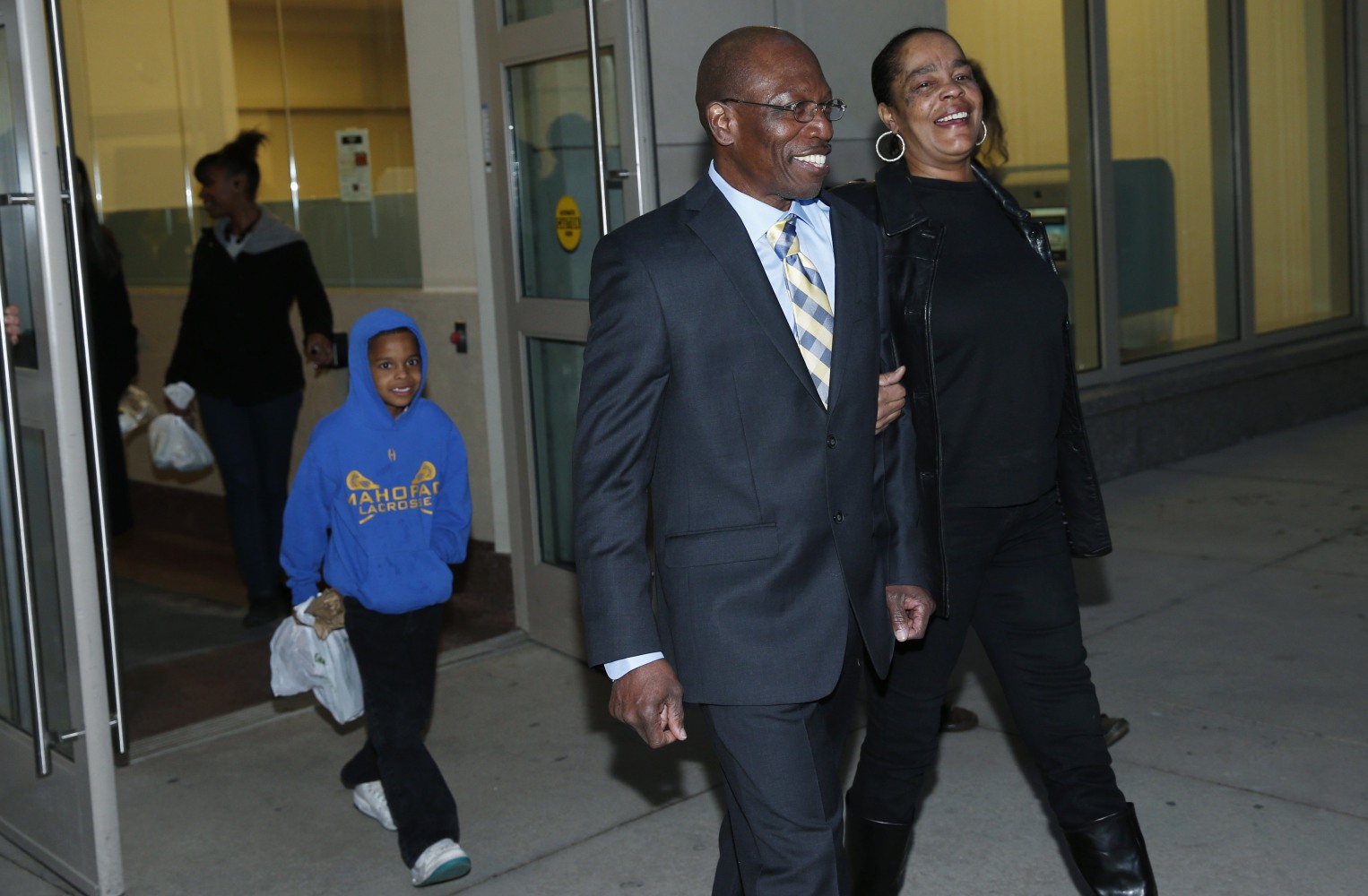
A Denver man who spent more than a quarter-century in prison for an attack he denies committing walked free Tuesday, locking arms with his wife as his tearful children applauded and his grandkids embraced a man they had never met. 

Clarence Moses-EL, 60, had just posted a $50,000 bond that a judge required for his freedom after she overturned his 1988 conviction on rape and assault charges and found that he would likely be acquitted if his case went to trial again. Moses-EL was convicted after the victim identified him, saying his face came to her in a dream. 


When police initially asked her who assaulted her, she named another man, who later confessed to having sex with her at the same time that night. 

Man's Rape Conviction Overturned After 28 Years 

Outside the jail Tuesday, Moses-EL wore a black suit and tie as he stood beside his wife, Stephanie Burke, moments after hugging three of his 12 grandchildren for the first time. 

Surrounded by his tearful children, he took a deep breath of the crisp late afternoon air.
"This is the moment of my life, right here," Moses-EL told reporters. "I'm at a loss for words. I just want to get home to my family."

Moses-EL has long maintained his innocence, and his case inspired legislation requiring preservation of DNA evidence in major felony cases for a defendant's lifetime after police threw out body swabs and the victim's clothing. Supporters posted bond for his release after Moses-EL was transferred from the prison where he was housed for decades..

His spirituality kept him from losing hope during 28 years of his 48-year sentence, he said.
"And my innocence," he said. "That's what really kept me going." 

But still looming was the prospect of a new trial. Prosecutors have not decided whether to try Moses-EL again, saying they are considering the age of the case and the availability of witnesses. A tentative trial date was set for May, if prosecutors decide to pursue new charges. 

The case involved a woman who was attacked after she returned home from a night of drinking. When police initially asked who assaulted her, she named the man who later confessed to having sex with her. 

More than a day after the assault, while in the hospital, the woman identified Moses-EL as her attacker, saying his face appeared to her in a dream. 

Moses-EL's efforts to appeal his conviction were unsuccessful and the legal and political system repeatedly failed him in his decades-long attempt to win his freedom. 

He won a legal bid for DNA testing on the evidence to clear his name, but Denver police threw it away, saying they didn't see any notice from prosecutors to hold on to it. 

In 2008, the governor, a former Denver prosecutor, objected to legislation that would have given him a new trial and that received widespread support from lawmakers. 

Moses-EL's break came when L.C. Jackson, whom the victim had initially identified as her rapist, wrote to Moses-EL in 2013 saying he had sex with the woman that night. Jackson has not been charged in this case but is imprisoned for two other rapes in 1992. 

His attorney, Eric Klein, said it would be foolish for prosecutors not to dismiss the case against an innocent man…

Monday, November 23, 2015

Convict in 3 sex crimes freed by DNA tied to fugitive rapist

 Convict in 3 sex crimes freed by DNA tied to fugitive rapist

November 23, 2015 
LOS ANGELES (AP) — A man imprisoned 16 years for rape and sex assault convictions was exonerated Monday and ordered freed after DNA evidence linked the crimes to a serial rapist on the FBI's most wanted list.

Los Angeles Superior Court Judge William Ryan granted a petition supported by prosecutors to release Luis Vargas, who was serving a sentence of 55 years to life in prison for three sexual assaults.

Vargas broke down, placing his hand to his forehead and covering his eyes as the judge ordered the case dismissed during the brief hearing packed with family and law school students who had worked to free him...

Lawyers and students for the innocence project at California Western School of Law took up the case after Vargas got in touch in 2012 and said he thought he was wrongly convicted of crimes that were the work of the so-called Teardrop Rapist.

The notorious predator known for a tattoo of a teardrop under his eye has been linked by DNA to 11 crimes and is suspected of 35 in total across the Los Angeles area, the innocence project said. Vargas has a similar tattoo.

Vargas had insisted on his innocence all along, telling the court at his 1999 sentencing that he was concerned the individual who "really did these crimes might really be raping someone out there, might really be killing someone out there."

In cases dating back to 1996, the Teardrop Rapist approached girls or women in the early morning walking to school or work, pulled a weapon such as a gun or knife, forced them to a secluded area and sexually assaulted them, officials have said.

Police in 2012 released several sketches of the suspect they described as a light-skinned Hispanic man between 40 and 55 years old.

His most striking characteristic is the tattoo some victims have reported seeing on his face, though there are conflicting reports about which eye it is under or whether there is more than one tear.

Vargas was convicted of kidnapping, forcibly raping and sodomizing one woman and attempting to rape two others between February and June 1998.

DNA testing methods were not as sensitive at the time of the trial and the convictions hinged on positive identifications by the three victims.

Prosecutors said the three assaults were so similar, they were "signature crimes" that could only be committed by the same person. The women all corroborated each other by pointing to Vargas, who had a previous rape conviction.

The judge noted that their initial identifications, however, were tentative and inconsistent in describing their assailant.

"This was a shaky witness identification case," said attorney Alex Simpson, of the California Innocence Project. "This happens all the time. It is the No. 1 factor in wrongful convictions across the country."
Jurors disregarded Vargas' alibi witnesses, including the manager of a bagel shop, who said he was working there the mornings of the attacks.
With improved technology, his lawyers were able in show that genetic evidence from the forcible rape was linked to the Teardrop Rapist and not Vargas.
Prosecutors conceded it was a case of mistaken identity and that new evidence pointed "unerringly to innocence," Deputy District Attorney Nicole Flood said in a letter to the judge.
Vargas' daughter, who was 10 when he was taken away, said it was hard growing up without a father and she often cried herself to sleep, but she never quit believing in him...

Saturday, November 22, 2014

Ohio Men Wrongly Convicted of Murder After 39 Years Released


Two Ohio men wrongly accused of murder experienced freedom for the first time in nearly four decades on Friday morning, but said they don’t harbor bitterness over their unjust imprisonment.
A Cleveland judge on Wednesday had dropped all charges against Ricky Jackson, 57, and Wiley Bridgeman, 60, allowing for the pair’s release. 

Jackson was 19 when he was convicted along with Bridgeman and Bridgeman’s brother, Ronnie, in the 1975 shooting death and robbery of Harold Franks, a Cleveland-area money order salesman. 

Testimony from a 12-year-old witness helped point to Jackson as the triggerman and led a jury to convict all three. Ronnie Bridgeman, now known as Kwame Ajamu, was paroled from prison in 2003. 

The witness, Edward Vernon, now 53, recanted his testimony last year, saying he was coerced by detectives, according to Cuyahoga County court documents. Vernon wrote in a 2013 affidavit that he never saw the murder take place, but he was told by detectives that if he didn’t testify against Jackson, his parents would be arrested.
Vernon said he confided in a pastor several years after meeting with Bridgeman, and the pastor encouraged him to reach out to the Innocence Project. Vernon wrote that he had “been waiting to tell the truth about this for a long time.”
“A lot of people think I should be mad,” said Jackson, but “in ’75, he was a 12-year-old-kid.” Jackson said “it took a lot of courage” for the witness to recant his statement.
The Ohio Innocence Project, which took up the case, said Jackson had been the longest-held U.S. prisoner to be exonerated. 
Jackson was originally sentenced to death, but that sentence was vacated because of a paperwork error. The Bridgeman brothers remained on death row until Ohio declared the death penalty unconstitutional in 1978.
“One of them came within 20 days of execution before Ohio ruled the death penalty unconstitutional” said Mark Godsey, director of the Ohio Innocence Project.
“The bitterness is over with,” said Wylie Bridgeman during his first moments of freedom on Friday.
Jackson agreed. “I had plans for my life,” but “time is just something that you can't get back so I'm not going to really cry about it,” he said.
While Ohio provides compensation for those who are wrongfully imprisoned, everyone is not guaranteed money. The Ohio Innocence Project has set up a fund for Jackson.
A story published in Scene Magazine in 2011 first raised new questions about the murder and whether Jackson and the Bridgeman brothers actually committed the crime.
Cuyahoga County Prosecutor Timothy McGinty said in court Tuesday that without an eyewitness there was not much of a case. “The state is conceding the obvious," he said, according to Reuters.
NBC News' Emmanuelle Saliba contributed to this report. Reuters also contributed.
byline photo

Cynthia McFadden

Cynthia McFadden is the senior legal and investigative correspondent for NBC News. Before joining NBC... Expand Bio

Longest Wrongful Incarceration in California History – First of the California 12 To Be Released

Michael Hanline’s Conviction Reversed – Release Expected Monday
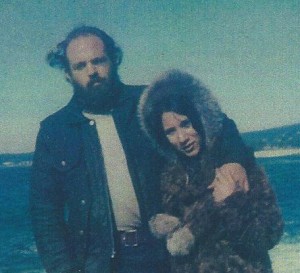
Michael Hanline and his wife before wrongful conviction
Michael Hanline and wife Sandee – 1974
California Innocence Project Client’s Conviction Reversed After 36 Years
Longest Wrongful Incarceration in California History – First of the California 12 To Be Released
Ventura, November 18, 2014 – A judge has overturned the conviction of Michael Hanline, convicted of a murder that was committed in 1978, after lawyers from the California Innocence Projectand the Ventura County District Attorney’s Office agreed that documents were withheld from Hanline at his original trial showing that others may have been responsible for the crime.
Additionally, new DNA evidence pointing to Hanline’s innocence undermined the District Attorney’s confidence in the conviction.
At 36 years, this ends the longest wrongful incarceration in
California history.
Hanline was wrongfully convicted of the shooting death of
victim J.T. McGarry in 1980. At the time, prosecutors argued Hanline was jealous of McGarry because the two were romantically involved with the same woman, and that Hanline and an accomplice killed McGarry in revenge. Hanline has always claimed others were responsible for the murder, and that he had been wrongfully accused.
The California Innocence Project began looking into Hanline’s case in 1999, the year the project was founded, and fought for years to obtain evidence from the 1978 murder. Finally, in 2008 a federal magistrate ruled that his conviction should be overturned. Unfortunately, another federal judge overruled the reversal. Hanline’s case seemed to be over, and his only other option appeared to be the granting of clemency from the Governor. His case was one of the California 12—twelve cases where innocence clemency petitions were presented to Governor Brown 18 months ago after a 712 mile Innocence March from San Diego to Sacramento by lawyers from the California Innocence Project.
“DNA testing recently conducted shows that another individual committed this crime and proves Mike’s innocence,” said Justin Brooks, Director of the California Innocence Project at California Western School of Law and one of the lawyers who walked 712 miles in the Innocence March. “It’s amazing that Mike will finally be released after 36 years of wrongful incarceration. It’s time for him to get back to his family and his life.”
“I’m so pleased that the Ventura County District Attorney’s Office agreed to examine the case and join us in the petition to reverse the conviction,” said Alex Simpson, Associate Director of the California Innocence Project at California Western School of Law and the attorney who argued the petition. “This is how cases should be resolved.”
Hanline will appear before Judge Donald Coleman of the Ventura County Superior Court on November 24 where he is expected to be released.
About the California Innocence Project
The California Innocence Project is a California Western School of Law clinical program dedicated to the release of wrongfully convicted inmates and providing an outstanding educational experience for students enrolled in the clinic. The California Innocence Project receives approximately 2,000 claims from inmates each year and has earned the exoneration of 11 wrongfully convicted clients since its inception.

Sunday, September 7, 2014

Prosecutor Joe Freeman Britt, no longer admired for record-breaking number of Death Row convictions

As 2 Go Free, a Dogged Ex-Prosecutor Digs In


LUMBERTON, N.C. — The most memorable moment of the trial that put Henry McCollum and Leon Brown behind bars for three decades for a hideous 1983 rape and murder was a display of brilliant courtroom theatrics.

District Attorney Joe Freeman Britt of Robeson County, who stood 6-foot-6 and came to be known as America’s “Deadliest D.A.,” asked jurors to try to hold their breath for five minutes — the time it took the 11-year-old victim to choke to death, after her killer stuffed her panties down her throat with a stick — to get a small sense of the horror she experienced.

The jury came back with two of the more than 40 death penalty convictions Mr. Britt won over almost two decades.


Those two convictions — obtained on the basis of inconsistent, soon recanted, confessions from two mentally impaired teenagers who said they had been coerced to sign statements written by interrogators, and testimony from an informer who previously did not implicate the two young men — were overturned last week. Mr. McCollum and Mr. Brown were exonerated and set free.


Photo

Leon Brown in his death row cell block in 1987. Credit Scott Sharpe/The News & Observer, via Associated Press

Their release concluded a judicial horror story in which the two men were sent to death row though no physical evidence linked them to the murder, while a serial sex offender who lived less than 100 yards from the crime scene — and who, a few weeks after that murder, would kill a teenage girl nearby in strikingly similar circumstances — was never pursued as a suspect.

But if the case was finally closed, the episode reopened ugly memories of what critics say was a merciless criminal justice system that ran roughshod over helpless people for decades in this poor, sprawling, racially volatile county sometime known as the Great State of Robeson.
At the heart of that is the legacy of Joe Freeman Britt, who earned a spot in “Guinness World Records” and a “60 Minutes” profile for his prowess in sending people to death row. (Only two were eventually executed. The most infamous was Velma Barfield, 52, who died from lethal injection in 1984 for killing her fiancĂ© by poisoning his beer.)

And whereas Mr. Britt, now 79 and retired, once dominated this county and won headlines for convictions, now some on both sides of the courtroom see a different tale.

The current district attorney, Johnson Britt, whose grandfather was first cousin to Joe Freeman Britt’s father, suggested that his predecessor could be tyrannical.

“He is a bully, and that’s the way he ran this office,” he said. “People were afraid of him. Lawyers were afraid of him. They were intimidated by his tactics. And he didn’t mind doing it that way.” He added: “You treat people with dignity, and you can get a whole lot more done that way than you can by trying to run over people. And that’s part of his legacy, that he ran over people.”
In a subsequent interview, Joe Freeman Britt made it clear that Johnson Britt was not his kind of prosecutor, either.

“Well, let’s say, if I was a bully, he is a pussy. How about that?” the elder Mr. Britt said...

Read more.

Saturday, August 9, 2014

Fresh doubts over a Texas execution; New evidence revives concerns that a man was wrongly put to death in 2004


New evidence revives concerns that a man was wrongly put to death in 2004
Published on August 3, 2014
 
CORSICANA, Tex. — For more than 20 years, the prosecutor who convicted Cameron Todd Willingham of murdering his three young daughters has insisted that the authorities made no deals to secure the testimony of the jailhouse informer who told jurors that Willingham confessed the crime to him.

About this project: The investigation was reported and written by Maurice Possley for The Marshall Project, a new nonprofit news organization focused on the criminal justice system. Sign up for updates on their launch.

Since Willingham was executed in 2004, officials have continued to defend the account of the informer, Johnny E. Webb, even as a series of scientific experts have discredited the forensic evidence that Willingham might have deliberately set the house fire in which his toddlers were killed.
But now new evidence has revived questions about Willingham’s guilt: In taped interviews, Webb, who has previously both recanted and affirmed his testimony, gives his first detailed account of how he lied on the witness stand in return for efforts by the former prosecutor, John H. Jackson, to reduce Webb’s prison sentence for robbery and to arrange thousands of dollars in support from a wealthy Corsicana rancher. Newly uncovered letters and court files show that Jackson worked diligently to intercede for Webb after his testimony and to coordinate with the rancher, Charles S. Pearce Jr., to keep the mercurial informer in line...

Wednesday, December 4, 2013

Prosecutor withholds evidence, destroys innocent lives, allows killer to kill again, becomes a judge--then spends three days in jail


THE CRIMINAL IN THE PROSECUTOR'S CHAIR: Prosecutor Ken Anderson. It's about time the legal system took some action against prosecutors and judges who knowingly destroy innocent lives.

Innocent man: How inmate Michael Morton lost 25 years of his life
By Josh Levs
CNN
December 4, 2013

...A few years ago, a group of attorneys, working pro bono on Morton's behalf, managed to bring the truth to light. Not only was Morton innocent, but the prosecutor, Ken Anderson, was accused of withholding crucial evidence.

The little boy, Eric, had seen the attack and told relatives that daddy was not home at the time. He described the man who did it. Neighbors had described a man parking a green van behind the Mortons' house and walking off into a wooded area. A blood-stained bandana was found nearby. None of that evidence made it into the trial.

It took years of fighting, but Morton's attorneys finally got the bandana tested for DNA. It contained Christine Morton's blood and hair and the DNA of another man -- a convicted felon named Mark Norwood.

Norwood had killed Christine Morton. And since no one figured that out after her death, he remained free. He killed another woman in the Austin area, Debra Baker, in similar circumstances less than two years later, authorities say.

Norwood has now been convicted in Morton's killing, and indicted in Baker's killing. A documentary details how Michael Morton -- with help from the Innocence Project -- proved he didn't kill his wife.

Morton was freed in October 2011. He was 57 years old. "I thank God this wasn't a capital case," he said.

Morton's story, told in the CNN Films' documentary "An Unreal Dream," shines a spotlight on wrongful convictions in the United States. More than 2,000 wrongfully convicted people were exonerated between 1989 and 2012, according to data compiled by the University of Michigan Law School.

But Morton's case has paved new ground that could affect cases nationwide.

Last month, Anderson -- Morton's prosecutor who in 2001 became a judge -- pleaded no contest to criminal contempt for deliberately withholding exculpatory evidence.

Anderson's punishment pales in comparison to Morton's experience. The former prosecutor stepped down from his position as a judge and agreed to 10 days in jail. He then served only five of those days, under Texas laws involving good behavior behind bars.

He also agreed to a $500 fine, 500 hours of community service, and the loss of his law license, according to the Innocence Project, a legal clinic affiliated with Yeshiva University's Cardozo Law School.

It's "an extremely rare instance, and perhaps the first time, that a prosecutor has been criminally punished for failing to turn over exculpatory evidence," the Innocence Project said.

The "historic precedent demonstrates that when a judge orders a prosecutor to look in his file and disclose exculpatory evidence, deliberate failure to do so is punishable by contempt," said Barry Scheck, the project's co-director.

The organization is working with the Texas Criminal Defense Lawyers Association and the Innocence Project of Texas to coordinate a review of Anderson's cases.

Anderson, meanwhile, has not publicly acknowledged any personal wrongdoing. In court, he said he couldn't remember details of the case, and that he and his family have been through false accusations over it.

"I apologize that the system screwed up. I've beaten myself up on what I could have done different and I don't know," he said, acknowledging Morton's "pain."

Morton asked a judge to "do what needs to be done, but at the same time to be gentle with Judge Anderson."

In prepared remarks outside the courthouse, Anderson repeated that he wanted to "formally apologize for the system's failure to Mr. Morton and every other person who was affected by the verdict."

Tuesday, February 12, 2013

Freed after 29 years in prison for crime he did NOT commit

Wrongful convictions happen everywhere, but they seem to happen more often in Texas. The post following this one is about another innocent man imprisoned in Texas for a crime he didn't commit. You'd think Bible belt folks would be more averse to people bearing false witness against their neighbors.

Randolph Arledge, right, embraces his son, Chris Rodgers, center; at left is Innocence Project of Texas policy director Cory Session

Freed after 29 years in prison for crime he did NOT commit
Man wrongfully convicted of stabbing a woman to death is released after DNA reveals he wasn't the killer
By ASSOCIATED PRESS REPORTER
12 February 2013

A 58-year-old Texan Randolph Arledge walked free Monday after serving years for a crime he didn't commit -- the repeated stabbing of a woman whose body was found on a dirt road in rural North Texas.

Arledge was sentenced to 99 years in prison in 1984 for killing Carolyn Armstrong.

But a state district judge in Corsicana, about 50 miles southeast of Dallas, agreed with prosecutors and Arledge's attorneys that he could no longer be considered guilty after new DNA tests tied someone else to the crime.

Judge James Lagomarsino agreed to release Arledge on bond while the process of overturning his conviction is pending. The Texas Court of Criminal Appeals must accept Lagomarsino's recommendation for the conviction to be formally overturned, a process that is considered a formality.

Arledge wore shackles around his wrists and ankles at the start of the hearing, but was later taken into a back room by two deputies to have them removed.

When he returned, Arledge hugged his two children. His daughter was 4 years old and his son 7 when he was sent to prison.

'They suffered more than anybody,' Arledge told reporters afterward. He gestured to his daughter, Randa Machelle Arledge. 'She's always talking about, she wanted me to come pick her up from school. Now she's picking me up.' His children said they remained hopeful through the years, not doubting his innocence.

'Every time he came up for parole, it was broken, shattered hopes,' his daughter said.

Armstrong's body was found in August 1981 on a rural dirt road in Navarro County, according to a court filing by Arledge's attorneys. She had been stripped naked from the waist down and stabbed more than 40 times.

Her abandoned car was found miles away with several pieces of evidence, including a black hairnet on the left side of the driver's seat. Hair taken from that net was preserved for three decades.

In 2011, more advanced DNA testing linked samples from the hair net and elsewhere to someone else.

Navarro County District Attorney Lowell Thompson said authorities are searching for the person matched to the DNA and believe they know where he is. The case 'will stay open until we solve it,' he said in an interview...

Like many wrongfully convicted inmates, Arledge was sent to prison with the help of faulty eyewitness testimony. Two co-conspirators in an armed robbery testified at his trial that he had admitted to stabbing someone in Corsicana and that he had blood on his clothes and knife, according to the filing by Arledge's attorneys.

One of those witnesses has since admitted to lying about Arledge due to a personal dispute, the filing said.

Arledge became the 118th person in Texas state courts to have his conviction overturned, according to the University of Michigan's national registry of exonerations...

Thursday, February 7, 2013

Former prosecutor, now a judge, is facing investigation: innocent man spent 21 years in jail

Attorney testifies in Texas inquiry of former DA
By WILL WEISSERT
Associated Press
February 7, 2013

GEOGRETOWN, Texas (AP) — Attorneys representing a former Texas district attorney accused of prosecutorial misconduct in a wrongful murder conviction are trying to raise doubts about what occurred during the original trial.

Testifying Thursday is Bill Allison, a defense lawyer for Michael Morton.

Morton served nearly 25 years in prison for his wife's slaying — but was freed on DNA evidence in 2011.

Ken Anderson was the case's prosecutor but is now a judge. Morton's attorneys allege he withheld evidence indicating their client's innocence.

Anderson is now facing a court of inquiry on the matter. Allison detailed not receiving police case notes and other information at trial.

But Anderson's attorneys questioned whether he might have sought that evidence only after the fact.

Allison wavered. He eventually said: "You can't remember that which didn't happen."

Read more: http://www.seattlepi.com/news/texas/article/Attorney-testifies-in-Texas-inquiry-of-former-DA-4258506.php#ixzz2KF5txZwE

Friday, September 16, 2011

Justice Stevens Extols Pro Bono Service, Criticizes Connick Ruling

September 15, 2011
Justice Stevens Extols Pro Bono Service, Criticizes Connick Ruling
Blog of Legal Times

Retired Supreme Court Justice John Paul Stevens said Thursday night that for lawyers, "the greatest reward is not monetary," as he urged attorneys to take on clients in need of help on a pro bono basis.

Stevens, 91, spoke and received an award at a Washington celebration of the 25th anniversary of the American Bar Association Death Penalty Representation Project, which recruits volunteers from top law firms to assist death row inmates in their appeals.

Project director Robin Maher told the audience that the hundreds of lawyers recruited over the years have helped move 50 inmates off death row, either through exoneration or reduced sentences. She said the need is still great for lawyers to give skilled representation to those on death row, many of whom have had woefully inadequate counsel at trial and during the appeal process. "We need a much stronger word than crisis" to describe the situation, she said. The project trains and supports lawyers who participate.

Three law firms -- Arnold & Porter, Dorsey & Whitney, and Fredrikson & Byron -- received awards at the event for their pro bono representation. Also speaking was Anthony Graves, who was freed from prison in Texas last October after 12 years on death row and six years in prison. A special prosecutor appointed to review his conviction found no credible evidence linking Graves to the murders he was charged with committing.

"I was naive," Graves told the audience at the Decatur House, near the White House. "I thought if I was innocent, I would come out victorious." But the process of vindication took 18 years.

In his remarks, Stevens said that during his private practice years roughly 50 years ago, he never represented someone on death row. But he did take on the case of a prisoner at Joliet Correctional Center in Illinois who claimed that he had confessed to his crime because the police had beaten him. "I was convinced his story was true," Stevens said. Stevens remembers the case vividly, which he said is proof of how meaningful and rewarding pro bono service is.

Stevens, who in 1976 voted to reinstate capital punishment, announced in a 2008 decision that he had come to view the death penalty as unconstitutional, in part because of the risk of executing innocent people. He retired in June, 2010.

Stevens made it clear in his talk that he is still upset about the Supreme Court's March 29 decision in Connick v. Thompson. Stevens sharply criticized the ruling in a speech in May, and it is still on his mind.

In spite of extensive evidence of prosecutorial misconduct in New Orleans, a majority in Connick struck down a damages judgment that had been awarded to freed death row inmate John Thompson. That outcome turned on the Court's finding that the prosecutor could not be held liable for failure to train his staff, based on a single violation of Brady v. Maryland -- withholding exculpatory evidence from the defense. In his majority opinion, Justice Clarence Thomas cited the 1978 Monell decision, which said local governments could be held liable for civil rights violations only for actions that were based on official municipal policy.

Last night Stevens said the need to establish that a municipal policy such as inadequate training led to the civil rights violation was an "off the wall" and "obviously unwise" standard that "causes so much work" and should be changed. The common law concept of respondeat superior, which holds the supervisor responsible for the torts of employees, is the way to go, in Stevens' view...

Troy Davis in spotlight again as execution nears

September 16, 2011
Troy Davis in spotlight again as execution nears
Edecio Martinez

(CBS/AP) ATLANTA - Hundreds of thousands of people are rallying to support Georgia death row inmate Troy Davis. They not only oppose capital punishment but they also believe the state could put an innocent man to death.

The case is packed with drama: the murder of an off-duty police officer; conflicting eyewitness testimony; last-minute court decisions sparing a condemned man's life and global dignitaries who say they fear an innocent man could die.

Davis' case has captured considerable attention because of the doubt raised over whether he killed Mark MacPhail in Savannah in 1989. The U.S. Supreme Court even granted Davis a hearing to prove his innocence. It was the first time it had done so for a death row inmate in at least 50 years but he couldn't convince a judge to grant him a new trial.

The officer's family believes there is no doubt that Davis killed MacPhail and prosecutors say the right man was convicted.

Davis is scheduled to die Wednesday which is the fourth time his execution has been set in four years. He once came within two hours of being put to death. His attorneys say his legal appeals are exhausted and the chances of him winning another reprieve have dwindled.

However, supporters hope to convince Georgia's pardons board next week to spare his life.

The execution of Davis "risks taking the life of an innocent man and would be a grave miscarriage of justice," said former President Jimmy Carter, a Democrat from Georgia and death penalty opponent who wrote a letter on Davis' behalf.

Thursday, January 20, 2011

Prosecutor's courtroom snark returns to haunt him

Note: San Diego District Attorney Bonnie Dumanis is on the board of the California Bar Association, which may help to explain why the bar fails to act in cases where prosecutorial misconduct is found.

Voice of San Diego asks, "Who's 'Pretty Pathetic'?"

A San Diego prosecutor got in the face of a burglary suspect during a trial, suggesting that he's "pretty pathetic" and "pretty despicable." And there was more. "According to a state appeals court in San Diego, the prosecutor also questioned the defense lawyer's integrity, suggested the attorney had coached Higgins, and described a defense psychiatrist as a hired gun who had 'attacked a victim in a rape trial,'" the San Francisco Chronicle reports.

All this sounds more "Law & Order" (or "L.A. Law" for you old school types) than real life. An appeal court is not amused: it's thrown out the guilty verdict and ordered a new trial.


Prosecutor's courtroom snark returns to haunt him
Bob Egelko
January 19 2011
SF Gate

When burglary defendant Raymond Higgins testified that he had been distraught at the time of the alleged crime because of the death of a close friend, prosecutor Christopher Lawson asked him whether it wasn't "pretty pathetic if you're using the memory of a dead 17-year-old kid as an excuse."

After the judge ruled the question improper, Higgins said he'd also been feeling guilty about not attending the funeral of his sister, who had committed suicide. "You agree that's pretty despicable if you were using that as an excuse," Lawson told him.

According to a state appeals court in San Diego, the prosecutor also questioned the defense lawyer's integrity, suggested the attorney had coached Higgins, and described a defense psychiatrist as a hired gun who had "attacked a victim in a rape trial."

Lawson used his cross-examinations to make speeches and "engaged in a pattern of misconduct that rendered the trial fundamentally unfair," the Fourth District Court of Appeal said in a ruling Thursday that overturned Higgins' conviction and granted him a new trial. He has been serving a five-year prison sentence.

The ruling comes in the wake of a report in October by the Northern California Innocence Project at Santa Clara University asserting that prosecutors in the state are seldom punished for unethical courtroom conduct. The project said it found 707 cases from 1997 to 2009 in which courts had found misconduct by prosecutors, but only six prosecutors who were disciplined by the State Bar. The bar, in response, said it would take another look at some of those cases.

Lawson, a deputy district attorney in San Diego County, was unavailable for comment. Steve Walker, a spokesman for the office, said prosecutors were reviewing the ruling.

Higgins, a businessman and Naval Academy graduate with no previous criminal record, was charged with burglary and assault for breaking into a neighbor's house in San Diego with two handguns in May 2008.

The neighbor had asked Higgins to keep an eye on her teenage son, who had gotten in trouble...