Showing posts with label defamation. Show all posts

Friday, August 22, 2014

Remittitur issued in Stutz v. Larkins on Aug. 20, 2014--but Judge Judith Hayes issued new default judgment TWO WEEKS EARLIER


See all posts regarding this case.

On August 20, 2014 the Court of Appeal issued a remittitur in Stutz v. Larkins. 

But Judge Judge Hayes issued a new judgment two weeks earlier--on August 6, 2014--in San Diego Superior Court!  [In typical fashion, Judge Hayes didn't bother to have her clerk serve me with the judgment.  I didn't know about it until I was served with a copy by plaintiff on August 19, 2014.]

I have no idea why the Court of Appeal bothered to issue the remittitur.  Judge Hayes certainly wasn't waiting for it.


UPDATE: It turns out that there's case law that says that Judge Hayes did not have jurisdiction on August 6, 2014 to issue a new judgment:


‘Until remittitur issues, the lower court cannot act upon the reviewing court’s decision; remittitur ensures in part that only one court has jurisdiction over the case at any one time.”  (People v. Saunoa (2006) 139 Cal.App.4th 870, 872.) 

So why did she do it?

Don't ask me.  I still don't understand why she felt it was in the interest of justice to throw out my opposition to summary judgment because I made a small mistake in format.  For good measure, she also threw out my evidence (which seems sort of redundant, right?) and then granted plaintiff's motion for summary judgment.

NO WEIGHING OF EVIDENCE, NO JURY TRIAL FOR DAMAGES

Why didn't Judge Hayes want to weigh the evidence?

And then why did she rant and rave about defamation ever since, as if the evidence had been weighed and there had been a factual finding of defamation?

There was no justification for outrage or anger when the decision was based on a pure technicality.  And there was no justification for denying me a jury trial regarding damages for four years.

Judge Hayes granted default four years after granting summary judgment.  She then awarded nominal damages of $30,000 based on the fact that there were TWO (yes, 2!!!) Internet searches for Plaintiff in a certain month. 

Here's what I wrote in my Opening Brief regarding the $30,000 in "nominal" damages:

The calculation for the $30,000 is based on a ludicrous,
unreasonable and illogical conclusion drawn from Exhibits D and E...

If the trial court had looked at Exhibit E of the prove-up, it would
have seen that visitors to Defendant’s site were looking for CVESD, CTA,
MEA, Fagen Friedman Fulfrost, Emily Shieh, Voice of San Diego Education,
Procopio, Kaiser Permanente, Vickie Gilbreath, medical records,
insurance, the new teacher project, Cornell, Bonifacio Bonny Garcia, CTA
lawyer, and Councilman Castaneda.

It isn’t until page AA 2510 that we see the
two (2!) total queries...referring to Plaintiff. 
These two queries would appear to
justify damages of $.86...

It was unreasonable for the trial court to order Defendant to pay Plaintiff
$.43 every single hit on the site, when almost all of the hits were by
Defendant herself; search robots; visitors who only stayed on the site a
second or two; people looking for health and insurance information--
particularly Kaiser Permanente; visitors wanting information about
schools, education and San Diego politics; or non-Plaintiff lawyers.

The Court of Appeal backed-up Judge Hayes, also based mostly on technicalities.

Erasing information on my websites

I've been working hard erasing web pages and blog posts that could be considered violations of  Judge Judith Hayes' injunction.

In the past couple of months I've depublished hundreds of blog posts and erased or edited several web pages.  I'm starting to erase web pages with public records:

Deposition page plus six additional pages

Motion to compel


Friday, June 27, 2014

Here is a judge and a case that offers a bit of hope for our legal system

Judge Awards Utah Couple $306,750 in Case Against Retailer That Tried to Impose Fine for Critical Online Review

Statement of Scott Michelman, Attorney, Public Citizen

June 26, 2014

Contact: Angela Bradbery (202) 588-7741
Scott Michelman (617) 899-9076

On Wednesday, Judge Dee Benson of U.S. District Court in Utah awarded Public Citizen clients John and Jen Palmer $306,750 ($102,250 in compensatory damages and $204,500 in punitive damages) against the online retailer KlearGear.com. The company had demanded $3,500 from the Palmers for writing a critical online review of the company, then ruined John’s credit when he refused to pay.

As a result of KlearGear.com’s actions, the Palmers lost credit opportunities; suffered anxiety, fear and humiliation; and spent weeks without heat in their home for themselves and their 3-year-old son when their furnace broke and they were unable to obtain a loan to replace it.

Public Citizen sued KlearGear.com on the Palmers’ behalf in December. When KlearGear.com failed to respond, the court granted a default judgment declaring that John did not owe the $3,500 and setting a hearing, held Wednesday, to determine damages. After an hour-long hearing at which both plaintiffs testified, the judge announced the award from the bench.

We are gratified by Judge Benson’s ruling, which appropriately compensates the Palmers for their ordeal and punishes KlearGear.com for its abuse of the credit reporting system in retaliation for the Palmers’ speech. The court sent a strong message that corporate bullying of consumers would not be tolerated. The Palmers are relieved that John’s credit has been restored and they feel vindicated by today’s award.

More information about the case is available here.

Thursday, June 12, 2014

CA Supreme Court Won't Publish Opinion that Former UCLA Basketball Player’s Defamation Lawsuit May Go Forward


June 12, 2014

Supreme Court Denies Request to Publish Ruling in Former UCLA Basketball Player’s Defamation Lawsuit

By a MetNews Staff Writer

The California Supreme Court yesterday declined to order publication of a Court of Appeal ruling that allows a former UCLA basketball player to sue Time Inc. over a critical story that appeared in Sports Illustrated.
The justices, at their weekly conference in San Francisco, voted unanimously to deny the request by attorneys for Reeves Nelson. While court rules allow the Supreme Court to order publication of Court of Appeal opinions where the panel has denied certification, such requests are rarely granted.
Div. Four ruled March 11 that Nelson had established a prima facie case of defamation and false-light invasion of privacy, and that Los Angeles Superior Court Judge Mary Ann Murphy erred in granting the defendant’s anti-SLAPP motion.
The story by George Dohrmann appeared in March 2012. It said that Nelson, who had been dismissed from the team, was the “ringleader” of a band of undisciplined freshman athletes whom coach Ben Howland couldn’t or wouldn’t control, leading to a failed season.

—AP
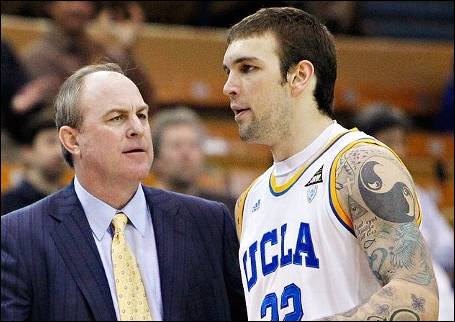
UCLA coach Ben Howland and Reeves Nelson are pictured during a UCLA basketball game.

After leaving UCLA, Nelson played for a pro team in Lithuania for five weeks, returning to await the results of the 2012 NBA draft. When no team selected him, he tried unsuccessfully to catch on with the Los Angeles Lakers, then played in the NBA Development League.
The website LatinBasket reported that he played this year for a team in Nogales, Mexico.
The story claimed Nelson had been involved in numerous incidents in which teammates were physically attacked or otherwise demeaned. He supposedly deliberately injured teammates during practice; urinated on a fellow player’s bed; pulled on a player’s arm, reinjuring the man’s surgically repaired shoulder; knocked another teammate to the ground from behind, injuring his back; and injured another player by elbowing him in the ribs, all of which he denied.
Nelson further denied Dohrmann’s assertion that he had admitted those allegations and apologized for them when he said:
“On all that stuff, I have no trouble admitting that I lost control of my emotions sometimes. I take responsibility for my actions. I’m really just trying to learn from the mistakes I made on all levels.”
Dohrmann and his editor both filed declarations insisting that the story had been carefully and accurately sourced.
Los Angeles Superior Court Judge Lee Edmon, writing for the Court of Appeal while sitting on assignment, agreed with the trial judge that the plaintiff was a limited purpose public figure who must prove actual malice in order to prevail. But Edmon also concluded that Nelson had a prima facie case because if he can prove that he never admitted to or apologized for the alleged misconduct, he will have established falsity and actual malice.
She cited Masson v. New Yorker Magazine (1991) 501 U.S. 496, in which the high court held that a psychoanalyst who had been interviewed by a reporter regarding his relationship with the Sigmund Freud archives had established a prima facie case of defamation, based on evidence that his remarks had been taken out of context and quotation marks used around comments that he had not made.
Edmon wrote:
“Crediting (as we must for anti-SLAPP purposes) Nelson’s account of the interview, we conclude that Dohrmann’s statement that Nelson confirmed some of the incidents described by the article and expressed regret would support a finding of actual malice. As in Masson, the alleged falsity is not the words spoken by Nelson, but the context in which the words are placed. As reported by Dohrmann, Nelson appears to be admitting and apologizing for each of the incidents described in the article. But Nelson says these incidents never happened and more significantly for our analysis that Dohrmann never asked him about them. Although Nelson concedes he made the quoted statement, he says it was in response to Dohrmann’s inquiry as to how he felt about his suspension and expulsion from the team, not an inquiry about the particular incidents described in the article. This difference is material because it significantly changes the meaning of Nelson’s admission and apology. As such, it would support a finding of actual malice.”
The case is Nelson v. Time, Inc., B245412.

Monday, April 7, 2014

Court rules BPI lawsuit against ABC News may continue


Illustration by Tim O'Brien for Mother Jones

Court rules BPI lawsuit against ABC News may continue
nicoleweddington
Daily Kos member
Mar 31, 2014

A defamation lawsuit filed by Beef Products, Inc., in 2012 against ABC News, will be heard in the state court of South Dakota, a circuit court judge ruled March 27. Defamed meat product and lost profits are at the lawsuit’s core.

Defamed meat product and lost profits are at the lawsuit’s core. The circuit court judge retained a majority of the counts against the defendants in her decision, which stemmed from a hearing Dec. 17.

The lawsuit’s claims are allowed under the state’s disparagement laws regarding food. The statements ABC News made in regards to BPI’s meat product were in fact disparaging, the judge said, however, the court does not recognize if the statements are true or false.

News anchors report BPI meat product is pink slime

Back in 2012, ABC News reported on BPI’s Lean Finely Textured Beef, deeming it “pink slime,” because, as ABC states, the meat product was pink and slimy. Not only was the term pink slime itself inappropriate, but the frequency in which it was used totaled 137 times while ABC also made over 100 false statements during the smear campaign, BPI asserts. The news outlet also paired its negative reports with positive statements about the meat product’s validity regarding approval from the FDA, but followed up by discounting the FDA.

The campaign made headway with consumers, who accounted for an 80-percent loss in sales. That equates to $400 million in profit. Three out of four plants closed and over 700 jobs were lost. Beef Products, Inc., is a private family business.

Reporters named in lawsuit

Other defendants in the case are two U.S. Department of Agriculture employees, two reporters who have a history with the story and a former employee of BPI who granted interviews. Diane Sawyer, anchor for ABC World News, is another defendant. All have a deadline of April 16 to file an answer on the current counts against them. Attorneys for ABC News, say the ruling may affect the First Amendment in an uncomfortable way.

The injury lawyer argued to dismiss the claims against ABC, but the judge was guided to the decision based on a reasonable fact-finding method and concluded the plaintiffs’ claims of defamation were satisfactorily alleged based on the defendants’ public statements.

Gagged by Big Ag
Horrific abuse. Rampant contamination. And the crime is…exposing it?
By Ted Genoways
Mother Jones
July/August 2013

Shawn Lyons was dead to rights—and he knew it. More than a month had passed since People for the Ethical Treatment of Animals had released a video of savage mistreatment at the MowMar Farms hog confinement facility where he worked as an entry-level herdsman in the breeding room. The three enormous sow barns in rural Greene County, Iowa, were less than five years old and, until recently, had raised few concerns. They seemed well ventilated and well supplied with water from giant holding tanks. Their tightly tacked steel siding always gleamed white in the sun. But the PETA hidden-camera footage shot by two undercover activists over a period of months in the summer of 2008, following up on a tip from a former employee, showed a harsh reality concealed inside.

The recordings caught one senior worker beating a sow repeatedly on the back with a metal gate rod, a supervisor turning an electric prod on a sow too crippled to stand, another worker shoving a herding cane into a sow's vagina. In one close-up, a distressed sow who'd been attacking her piglets was shown with her face royal blue from the Prima Tech marking dye sprayed into her nostrils "to get the animal high." In perhaps the most disturbing sequence, a worker demonstrated the method for eutha­nizing underweight piglets: taking them by the hind legs and smashing their skulls against the concrete floor—a technique known as "thumping." Their bloodied bodies were then tossed into a giant bin, where video showed them twitching and paddling until they died, sometimes long after. Though his actions were not nearly as vicious as those of some coworkers who'd been fired immediately, Lyons knew, as the video quickly became national news, that the consequences for him could be severe.

As we sat recently in the tiny, tumbledown house he grew up in and now shares with his wife and two kids, Lyons acknowledged—as he did to the sheriff's deputy back then—that he had prodded sows with clothespins, hit them with broad, wooden herding boards, and pulled them by their ears, but only in an effort, he said, to get pregnant sows that had spent the last 114 days immobilized in gestation crates up and moving to the farrowing crates where they would give birth. Lyons said he never intended to hurt the hogs, that he was just "scared to death" of the angry sows "who had spent their lives in a little pen"—and this was how he had been trained to deal with them. Lyons had watery blue eyes that seemed always on the verge of tears and spoke in a skittish mutter that would sometimes disappear all the way into silence as he rubbed his thin beard. "You do feel sorry for them, because they don't have much room to move around," he said, but if they get spooked coming out of their crates, "you're in for a fight."

Lyons had been trained in these methods of hog-handling (many of them, including thumping, legal and widely practiced), but a spokeswoman for Hormel—one of the largest food processors in the country and the dominant buyer of MowMar's hogs—had already called the video "appalling" and "completely unacceptable," and MowMar's owners had responded by vowing that any additional workers found guilty of abuse as authorities pored over the tape would be terminated. Still, it came as a surprise when his boss informed him that he had been formally charged and immediately fired. "We don't want to do it," the supervisor told him, "but we got to—because Hor­mel will quit taking the sows." He told Lyons to turn himself in at the courthouse.

While Lyons filled out paperwork and had his mug shot taken, his wife's cellphone buzzed again and again: Her husband's name was already on the evening news. Lyons hired a lawyer—but he was on video and he'd confessed to the deputy sheriff. "They got you, dude," Lyons said his attorney told him. He accepted a plea agreement—six months' probation and a $625 fine plus court fees—and signed an admission of guilt. It may seem like a slap on the wrist, but Lyons was the first person ever convicted of criminal livestock neglect on a Midwestern farm—and only the seventh person convicted of animal abuse in the history of the American meat industry. He wasn't alone for long: Five of Lyons' coworkers soon signed similar agreements.

It was a major PR win for PETA—which often appeals to local authorities to make arrests but rarely gets the kind of cooperation they got from the Greene County Sheriff's Office—but it was also a hollow victory. "Who in their right mind would want to work in a dusty, ammonia-ridden pig shed for nine bucks an hour but somebody who, literally, had no other options?" asked Dan Paden, the senior researcher at PETA who helped run the investigation. "And at the end of a long, frustrating day, when you are trying to move a pig who hasn't been out of its crate in [months], that's when these beatings occur—and people do stupid, cruel, illegal things." PETA was urging prosecutors to go beyond plea agreements for farmworkers; they wanted charges against farm owners and their corporate backers, to hold them responsible for crimes committed by undertrained, overburdened employees.

Don't Squeal
Which states have ag gag provisions? This prospect scared industrial-scale meat producers into organizing a coordinated pushback. Recognizing that, in the era of smartphones and social media, any worker could easily shoot and distribute damning video, meat producers began pressing for legislation that would outlaw this kind of whistleblowing. Publicly, MowMar pledged to institute a zero-tolerance policy against abuse and even to look into installing video monitoring in its barns. And yet last summer, at the World Pork Expo in Des Moines, MowMar's co-owner Lynn Becker recommended that each farm hire a spokesperson to "get your side of the story out" and called the release of PETA's video "the 9/11 event of animal care in our industry."

As overheated as likening that incident to a terrorist attack may seem, such thinking has become woven into the massive lobbying effort that agribusiness has launched to enact a series of measures known (in a term coined by the New York Times' Mark Bittman) as ag gag. Though different in scope and details, the laws (enacted in 8 states and introduced in 15 more) are viewed by many as undercutting—and even criminalizing—the exercise of First Amendment rights by investigative reporters and activists, whom the industry accuses of "animal and ecological terrorism." Ag gag laws allow industry "to completely self-regulate," says a whistleblowers' advocate. That should "scare the pants off" consumers who want to know how their food is made.

Using a legal cudgel to go after critics wasn't entirely a new tactic for agribusiness. PETA first began undercover investigations around 1981—getting video of rhesus monkeys being vivisected in a Maryland medical research lab by posing as employees—and a few legislatures responded by enacting laws to protect animal research from exposés. (Only Kansas had the foresight to expand its law to cover "livestock and domestic animals.") Then, in 1992, when two ABC PrimeTime Live reporters shot undercover video of Food Lion workers in the Carolinas repackaging spoiled meat, Food Lion sued—not for libel, since the tapes spoke for themselves, but for fraud and trespass, because the reporters had submitted false information on their job applications. (A jury awarded $5.5 million, but an appeals court reduced it to just $2.) In 1996, at the height of the mad cow scare, the Texas Beef Group launched a two-year lawsuit against Oprah Winfrey over an episode that questioned the safety of hamburger. Recently, not only has the rhetoric heated up, but so has the coordinated legislative effort. Deeply invested in industrywide methods that a growing number of consumers find distasteful or even cruel, agribusiness has united in making sure that prying eyes literally don't see how the sausage is made.

"If you think this is an animal welfare issue, you have missed the mark," said Amanda Hitt, director of the Government Accountability Project's Food Integrity Campaign, who served as a representative for the whistleblowers who tipped off ABC in the Food Lion case. "This is a bigger, broader issue." She likened activist videos to airplane black-box recorders—evidence for investigators to deconstruct and find wrongdoing. Ag gag laws, she said, don't just interfere with workers blowing the whistle on animal abuse. "You are also stopping environmental whistleblowing; you are also stopping workers' rights whistleblowing." In short, "you have given power to the industry to completely self-regulate." That should "scare the pants off" consumers concerned about where their food comes from. "It's the consumer's right to know, but also the employee's right to tell. You gotta have both."

Until the 20th century, American meat production, especially in the Midwest, was necessarily seasonal. Cattle, hogs, and chickens were part of small, diversified farms that sustained livestock all year long but tended to fatten animals and bring them to market only after harvest, when feed was plentiful and cheap. After profits ballooned during World War II, packers were eager to keep upping output (and sales) by turning packing into a year-round activity.

But hog farming on the cold, windswept plains of the Midwest was difficult in those days. Even in milder winters, farmers often suffered deaths among their herds, and sows would farrow only once a year. Midwestern stockmen tended to raise either cattle, which were hardy enough to withstand the cold, or chickens, which could be cooped during winter months. But then some enterprising hog farmers began building large confinement barns with slotted floors and pits below to catch manure. Such enclosures not only overcame mortality due to bad weather, but they made it possible to farrow sows twice a year.

By the close of the 1960s, the practice was so successful that Midwestern family farmers worried that meatpackers would build their own confinement facilities, establishing feed-to-market monopolies that would squeeze out small operations. Between 1971 and 1982, laws devised to forbid vertical integration and price-fixing passed in every state between Wisconsin and Oklahoma. Thus, when big meat producers began erecting barns capable of holding thousands of animals, the boom centered in the unregulated South.

But as the 1990s drew to a close, the industry suffered a devastating one-two punch. First, in July 1999, a North Carolina grand jury handed down the first animal cruelty indictments of farmworkers in American history after a three-month PETA investigation at Belcross Farm documented "daily violent beatings and bludgeonings of pregnant sows with a wrench and iron pole." Then, in September, floodwaters from Hurricane Floyd ruptured and overtopped manure lagoons all across the state. As the New York Times reported, "Feces and urine soaked the terrain and flowed into rivers." The ensuing backlash pushed producers to reconsider the Midwest, already depopulated by farm consolidation, as a place they could build large facilities with little governmental oversight or public outcry.

Through a series of lawsuits, big meatpackers successfully rolled back the family-farm protection laws, and soon industrial producers were rushing to buy up smaller Midwestern meatpacking plants and finance large-scale confinement facilities and feedlots. Beef packers moved into cattle-rich Nebraska, but hog development tended to focus on Iowa, where three of the biggest packers—Smithfield, Cargill, and Hormel—had gained special exemptions to the family-farm protection law by agreeing to two conditions: They would not engage in price-fixing of feed or livestock, and they would not seek to punish whistleblowers.

This compromise led to a mind-boggling boom in Iowa factory farms. For example, Greene County—which had few large-scale facilities when MowMar Farms applied for its permit a decade ago—now has 70, with at least another 14 permitted for construction. In a county of roughly 9,000 people, the hog population is more than 250,000.

As in any boom, the quick money and minimal restrictions attracted a number of fly-by-night developers. They sold to long-distance owners who, via a few local management companies, often hired inexperienced workers. And before long, Iowa resembled North Carolina of a decade before: a state dotted with giant hog confinements, many operating in violation of health codes, environmental requirements, and animal cruelty laws.

The release of the MowMar Farms video could have been a gut-check for the industry, a moment to reflect on whether the runaway growth had led to conditions unsafe for man or beast, perhaps even an opening for dialogue with animal welfare advocates. Instead, Julie H. Craven, the spokeswoman for Hormel, went on the offensive against PETA, criticizing its practice of methodically building cases over a period of months in order to demonstrate patterns of abuse. "If they are truly concerned about animal welfare," she said, "they should release information when they obtain it."

It marked a transition in the industry's strategy: Where once it had pushed back against journalists and whistleblowers after their videos ignited public outrage, now they were looking for a way to prevent such exposure in the first place. Soon afterward, meat industry lobbyists dusted off a long-dormant piece of model legislation crafted by a conservative think tank that would not only make it harder to release undercover video but would criminalize obtaining, possessing, or distributing it to anyone—including journalists or regulators.

Cindy Cunningham, spokeswoman for the National Pork Board, told me she thought such legal protections could be appropriate. "I liken it to somebody walking into your living room and taking video," she said. "If you're at a cocktail party and somebody shoots video of you from behind a candle—like they did to Mitt Romney—is that legitimate?"

Back in September 2003, the American Legislative Exchange Council (ALEC) released a piece of model legislation it called the Animal and Ecological Terrorism Act. Like so many bills drafted by the free-market think tank, AETA was handed over, ready made, to legislators with the idea that it could be introduced in statehouses across the country with minimal modification. Under the measure, it would become a felony (if damages exceed $500) to enter "an animal or research facility to take pictures by photograph, video camera, or other means," and, in a flush of Patriot Act-era overreaching, those convicted of making such recordings would also be placed on a permanent "terrorist registry."

After a few years on the shelf, ALEC's pet project found new life when radical groups like the Animal Liberation Front and the Earth Liberation Front destroyed testing labs and torched SUVs, prompting FBI deputy director John Lewis to say in 2005 that "the No. 1 domestic terrorism threat is the ecoterrorism, animal-rights movement." The bill was overhauled—modifying the ban on shooting video to "damaging or interfering with the operations of an animal enterprise" and eliminating the section on creating a terrorism watch list. This defanged version, renamed the Animal Enterprise Terrorism Act, was repackaged to congressional leaders as a needed revision of existing laws protecting medical research from unlawful interference. Though it wouldn't become apparent until much later, it was the beginning of lobbyists and lawmakers conflating radical ALF-type incidents with the undercover work done by PETA and journalists. The bill sailed through the Senate by unanimous consent, and in the House encountered resistance only from Rep. Dennis Kucinich (D-Ohio). Kucinich warned it would "have a chilling effect on the exercise of the constitutional rights of protest," before a voice vote on the bill allowed it to be ushered through.

Application of the law soon nipped at the heels of the First Amendment. Most notably, a jury found a New Jersey chapter of a UK-based anti-animal-testing group guilty of conspiracy for publishing the home addresses of researchers at Huntingdon Life Sciences—handing down convictions for seven, including the chapter's webmaster. The case was chronicled in a low-budget documentary called Your Mommy Kills Animals, which discussed the case for prosecuting animal rights activist groups, including PETA and the Humane Society of the United States (HSUS), as homegrown terrorist organizations. The movie was underwritten by über-lobbyist Richard Berman, who runs the Center for Consumer Freedom and was immortalized by 60 Minutes as "Dr. Evil." Because nonprofits don't have to reveal their donor lists, it's impossible to know exactly how much money Berman takes in from particular corporations. However, a canceled check for $50,000, introduced as part of a lawsuit resulting from the documentary, revealed that Hormel was a backer—and Berman described them in testimony as a "supporter." (Berman sued the filmmakers because, contrary to his wishes, they made a movie that was too evenhanded.)

Next Page: Why would the industry possibly want to protect a few bad actors at the risk of major expense and public outcry?

Alabama Journalist Tells Us What It Was LIke To Spend Five Months In Jail For Reporting A Story

"[The] order included a vague mandate to take down all content related to the alleged affair, without ever deeming which content was actually defamatory."

Alabama Journalist Tells Us What It Was LIke To Spend Five Months In Jail For Reporting A Story
By Nicole Flatow
Think Progress
April 7, 2014

“You get down to survival mode.” That was blogger Roger Shuler’s state of mind after being arrested and hauled off to jail for writing about a politically connected Alabama lawyer.

“Once you’re arrested I mean there’s not much you can do,” he told ThinkProgress in a conversation after his release, explaining that he felt powerless to handle the legal defense of his case. “Your hands are tied literally and figuratively and just to try to figure out how to get out was almost impossible … I really was afraid for my life at times.”

Until last week, Shuler was the only known journalist in the Western Hemisphere jailed for doing his job. Shuler, a former sports reporter and university editor who developed the political blog Legal Schnauzer, is known as a controversial figure in his community. He has fielded other allegations of falsehoods and has been embroiled in numerous lawsuits over his blogging. But even his critics conceded that a court order banning him from writing anything about the alleged extramarital affair of a man rumored to be running for Congress was likely unconstitutional, and a First Amendment outrage.

First, a Shelby County judge ruled that Shuler could not continue writing about the alleged affair of Robert Riley, Jr., the son of former Gov. Bob Riley rumored to be running for Congress. Then, when Shuler refused to comply with the order, police came to his home one evening and arrested him for contempt of court. Contempt of court is a punishment for failure to comply with a court order. In many instances such as this one, it is a “civil” offense, meaning it doesn’t carry long-term criminal penalties. But officials use jail as a means of forcing compliance with the order. So Shuler sat in jail until he complied.

Shuler was initially resistant to the order. But even when he wanted to comply, he didn’t know how.

“At my Nov. 14 hearing, the only hearing I had in the case, the court gave me no direction on how I could purge myself of contempt,” Shuler told the Reporters Committee for Freedom of the Press. “I noted that I had no computer or Web access to take down the posts, even though I knew it was unlawful to be forced into taking them down. The court’s response was more or less that I had to resolve that problem myself. With that kind of response from the court I felt caught between the proverbial ‘rock and a hard place.’”

Shuler said if he was lucky, he got to make a 15-minute call three or four times a week. “That’s the only communication I had with anybody,” said.

And getting a lawyer wasn’t easy. While defendants in criminal cases who cannot afford a lawyer have a right to court-appointed counsel, the same is not true in civil contempt cases. Shuler called himself middle class, and said he would “really need either pro bono or contingency type of legal representation and I think it’s a possibility but it’s very slow in trying to make it happen.”

Shuler was supported by legal briefs in his case from the American Civil Liberties Union of Alabama, and the Reporters Committee for Freedom of the Press. But neither organization was representing him directly, and only he had the power to appeal his own case. Shuler didn’t appeal. He said he spent his time in jail fearing for his life, and figuring out how he could comply with a sweeping contempt order and get out of jail. As the Reporters Committee for Freedom of the Press explained in an October letter, the order included a vague mandate to take down all content related to the alleged affair, without ever deeming which content was actually defamatory.

What ultimately facilitated Shuler’s release was the intervention of his wife, Carol, who drafted an agreement to take down some material that allowed Shuler to be freed at least temporarily. “She was the one that really negotiated getting me out,” he said.

Shuler was perhaps the most prominent inmate in Shelby County jail these last few months, but he says he wasn’t the only one who shouldn’t have been there. Most of the people he met were there for drug and alcohol problems, he said, or for mental health issues the jail didn’t appear suited to handle.

“Jail is I guess by definition a holding facility for people a lot of whom have not yet been found guilty of anything,” he said. (Jails typically hold individuals who have been charged but not yet convicted, or those who receive short sentences, typically less than a year). “I go to bed at night and a lot of times I think there are guys still in there … I get the feeling we’re in a culture right now, it’s sort of like arrest first, and ask questions later.”

Tuesday, January 21, 2014

Courtney Love Looks to Sue Ex-Attorney Over Bizarre Kurt Cobain Estate Fraud Claims


Marlon Brando's daughter Courtney Love, widow of Kurt Cobain (above), is the target of a defamation suit by her former lawyer.

Courtney Love Looks to Sue Ex-Attorney Over Bizarre Kurt Cobain Estate Fraud Claims
by Eriq Gardner
HollywoodReporter.com
9/17/2013

Courtney Love's unfettered love of social media has gotten her into much legal trouble over the years. In January, she is scheduled to go to trial for allegedly defaming her ex-attorney Rhonda Holmes in tweets and press interviews. The singer is charged with damaging the attorney's reputation by saying "they got to" Holmes and that her former lawyer was "bought off."

...In 2008, [Courtney] Love was ... preparing a lawsuit to charge that the Kurt Cobain estate had been mismanaged. Love says she hired Holmes to draft a complaint over stolen money and property. The following year, Holmes was quoted in the press as saying, "I have never seen such greed and moral turpitude. This case is going to make Bernard Madoff look warm and fuzzy."

But the lawsuit never came. Love says she didn't ever see a draft of the complaint that Holmes was working on. Holmes allegedly blamed it on others who had "broken into her computer and erased the drafts" and later, how she was "too busy."

As time went on, a fight over Frances Bean Cobain's trust erupted. In 2010, according to a story from The Fix, a settlement was reached to end litigation in Washington state court. A deal amended the trust known as "NMWH," said to be a reference to some of Kurt Cobain's final words to his wife, "No matter what happens, I love you."

Love also lost control of End of Music LLC, which owns Kurt Cobain's publicity rights. Love reportedly relinquished her position as acting manager after receiving a $2.5 million loan from the trust, and agreed not to participate in any revenues until she paid it back. Battles then ensued in arbitration over Kurt Cobain's musical equipment, paintings, and other personal belongings.

What led to all of this?

The countersuit centers on the 2009 letter allegedly sent by Holmes, which is said to have convinced those managing the Cobain trust that Love had hired an unstable attorney to represent her.

According to a motion to support the filing of counterclaims, when Holmes stated in the letter she was representing Love's daughter, it was untrue. She was only representing Love at the time.

Love's lawyer also points to "unduly personal," "bizarre," and "solicitous" statements made to Frances Bean Cobain in that same letter. Among the statements attributed to Holmes, "I lost my own husband from suicide within a few months of your Father's suicide. … I write you now because we all need your help and your support."

The letter also gives unsolicited advice about education, takes credit for winning "Trial Lawyer of the Year," and tells the teenager that, "You are ALL the unfortunate victims of a very large and very scary conspiracy. I have personally experienced the reach and criminality of these thieves: They have hacked into my PCs (on one such occasion, to make my legal brief in this very case 'disappear'; used my credit cards all over the county; and accessed/drained my savings account."

Cobain is told that she does "not have 1/1,000,000,000th of what it appears you should have in my view. … They accused your Mother of 'diverting money in 2003.' … Yes, as crazy as it sounds, not ONE of your 'protectors' (lawyers, bankers, accountants, managers, etc.) stood up to this. They had too much of an interest in keeping you and your Mom in the dark, sadly."

With less than four months left before a scheduled defamation trial, Love is looking to make her former lawyer pay for the statements made in this letter. She's seeking damages, including for emotional distress.

Holmes' attorney tells THR, "We view this as an act of desperation."

He adds that Love agreed to settle the case earlier this year and make a public retraction, and then breached the settlement agreement by going on Howard Stern's radio show and talking about it.

Monday, June 4, 2012

Melissa Lewis Joins Stutz Artiano's Employment Practice

Here's my question: if my website has damaged Stutz Artiano Shinoff & Holtz law firm's business so much that they felt they had to sue me for defamation, then why does it seem that Stutz is constantly adding more lawyers? How did Stutz calculate that it has suffered significant damage from my website and blogs?

PRESS RELEASE

Lewis Joins Stutz Artiano's Employment Practice
SAN DIEGO
MARKETWIRE via COMTEX
June 4, 2012

Melissa A. Lewis has joined the law firm of Stutz Artiano Shinoff & Holtz APC as an Associate. Ms. Lewis graduated Thomas Jefferson School of Law, Summa Cum Laude, Valedictorian. She is a graduate of Hawaii Pacific University and Fashion Institute of Design and Merchandising, graduating with honors. Ms. Lewis joins the Employment Practice Group at Stutz Artiano, representing employers in all aspects of the employment relationship, including litigation, administrative hearings, advisory, development of policies and procedures, preparation of handbooks, employee and supervisor training and conducting internal investigations.

Discovery suddenly stayed in Stutz Artiano Shinoff & Holtz defamation suit against this blogger

See all posts re Stutz Artiano Shinoff & Holtz v. Maura Larkins

I got a minute order from the San Diego Superior Court in the mail today. The timing is very, very strange. The last hearing in the case was March 9, 2012--two months and three weeks ago. My discussion with Commander Darin Fotheringham in the Santa Barbara Sheriff's office two days ago is the only event that I can connect even remotely to this bolt out of the blue.


June 1, 2012

Commander Darin Fotheringham
Office of the Sheriff of Santa Barbara

Dear Commander Fotheringham:

I was amused that on the very day I contacted you about my subpoena for business records from the Sheriff of Santa Barbara showing that Deputy Michael Carlson and his sister Robin Donlan involved Chula Vista Elementary School District in criminal actions, Judge Judith Hayes suspended all discovery in the case at issue.

My, my. The timing is fascinating. No papers had been filed asking that discovery be stayed. In fact, no papers had been filed in this case for two months.

I bow to your amazing—what shall I call it?—luck, perhaps?

Sincerely,

Maura Larkins


Note: I tried to fax the above letter to the fax number Commander Fotheringham gave me on May 30, 2012 for faxing the subpoena to him. My fax machine dialed the number, then the call was picked up. Next I heard a raspberry sound, and soon a man was telling me that if I'd like to make a call, I should hang up and dial again. I guess the guys who work for the Sheriff of Santa Barbara like to have fun. They seem to be really funny guys.

I think that it is highly unlikely that Commander Fotheringham or Sheriff Bill Brown contacted Judge Hayes. Here's the scenario I came up with for what most likely happened:

Commander Fotheringham may have talked to Michael Carlson. Michael Carlson went into cover-up mode (again). Carlson seems to have no remorse at all, not even for causing problems for the Sheriff of Santa Barbara. My guess is he thinks of himself as a victim. He has never indicated any regret for all the problems his actions caused to me, to my school district (including $100,000s in legal fees to defend Carlson's sister and others), and to the children in my school.

I imagine Michael Carlson would have called his attorney, Deborah Garvin, after Commander Fotheringham spoke to him. And perhaps his sister, Robin Donlan, who turned his misdemeanor into a huge mess for Chula Vista Elementary School District.

Deborah Garvin and Robin Donlan would probably each have contacted Dan Shinoff of Stutz Artiano Shinoff & Holtz, with whom they worked in the earlier case involving Carlson.

And that's where the chain of likely events gets murky for me. What happened next???? I'm simply unable to conjure an explanation for what could have happened.

The minute order I received from Judge Hayes says that discovery is stayed.

But actually it's a lot more complicated. Hayes also finally made a decision about two of the three March 9, 2012 motions. After almost three months of silence, she finally denied my motion to set aside the summary adjudication, even though I was able to provide documentary evidence proving that the decision was deeply flawed.

For the past two months and three weeks she pretended that discovery was open--even gave us a discovery cut-off date--but obviously it was never really open, since the summary adjudication was never set aside. I suspected that I would be shut down the minute I started discovery, so I gave myself a long vacation (including a month in Washington DC) and waited as long as possible to start discovery.

Judge Hayes is still delaying (until August 27, 2012) her decision on Stutz' motion to strike my answer. There is absolutely no case law to support such a decision in a case with a history like this one. San Diego County Office of Education has also refused to allow discovery in this case. It even hired Stutz law firm to make sure Diane Crosier didn't have to take a deposition or produce documents. I recently filed a public records request to at least get the records.

Wednesday, August 27, 2008

Attorney Bradley Marshall tries to intimidate Seattle Blogger

Apparently a lot of lawyers think that bloggers are easy to intimidate. I also have had the honor of having an eminent lawyer (actually, a whole firm of them) try to intimidate me into silence.

Lawyer Tries to Intimidate Seattle Blogger

From Hominid Views: People, politics, science and whatnot
July 31, 2008

What is this world coming to when a high-powered attorney to sports stars (and a now-deceased famous talk-radio host) goes on the attack against a lowly blogger?

You see, Bradley Marshall, attorney extraordinaire (well… if you don’t count the recent 18 month suspension of his license) just sent a letter to Seattle liberal blogger and journalist (and friend of mine) Michael Hood at Blatherwatch requesting that Michael yank some old blog posts and cease writing about him.

Michael is certainly not the first blogger to get such requests, but it must be quite the honor for Michael to get a letter from a lawyer of such stature...